
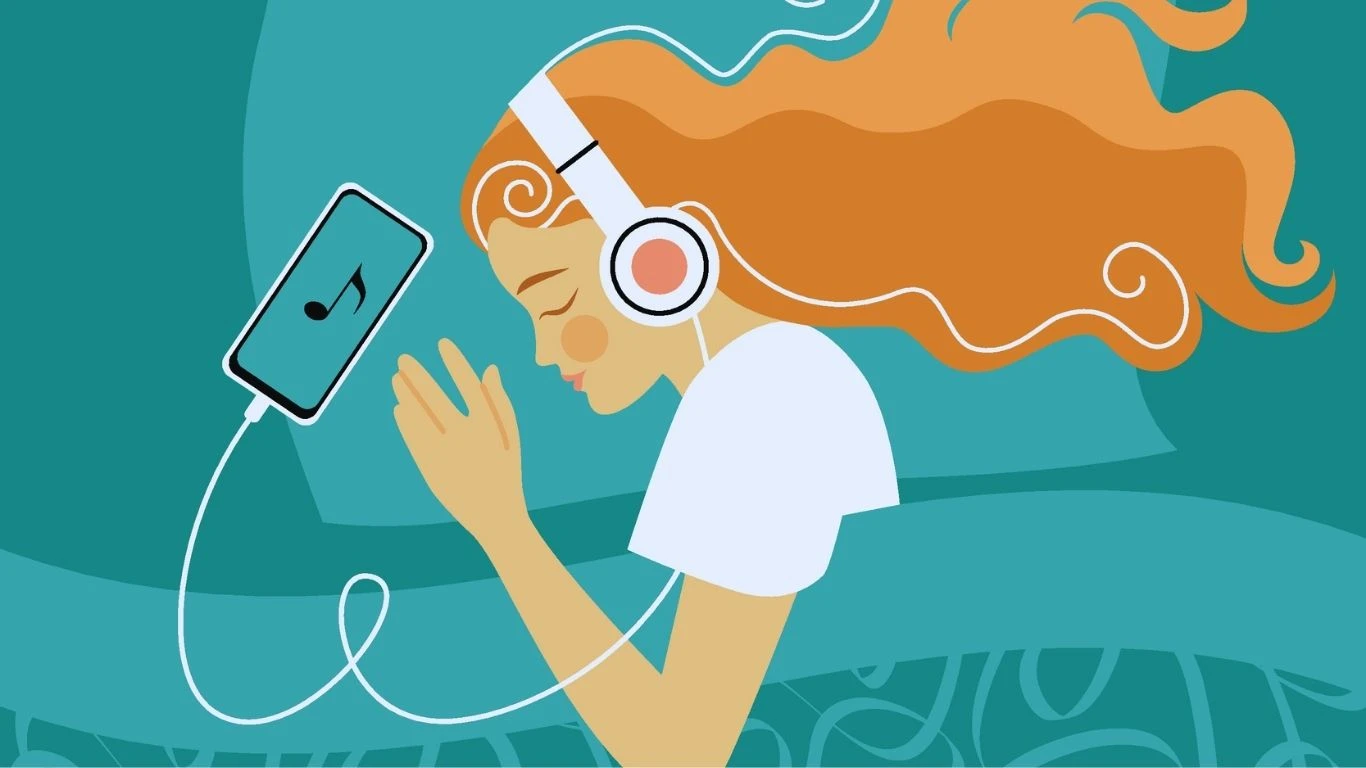
New Delhi: Have you ever felt like your brain just refuses to hit the “off” switch? You lie there for hours, and then inevitably wake up feeling like you haven’t slept at all. It’s a common frustration, and many people turn to music as a fix. But while a relaxing playlist seems like a dream solution, the science behind it is actually a bit of a mixed bag.
The Good: Why We Reach for the Playlists
For many, music acts as a psychological “buffer.” If you’re dealing with mild stress or a racing mind, soft instrumental or classical music can do a few things right:
- It’s a distraction: It gives your brain something neutral to focus on instead of your “to-do” list.
- The 60-BPM Sweet Spot: There’s a bit of biology at play here. Music with a tempo of 60–80 beats per minute roughly matches a resting heart rate, which can physically coax your body into a calmer state.
- Creating a Cue: Over time, playing the same tracks can become a Pavlovian signal to your body that says, “Hey, it’s time to shut down now.”
The Catch: When Music Becomes a Problem
However, listening to music while sleeping is not always beneficial. Some real drawbacks are often overlooked.
- The “Earworm” Effect and Brain Activity: We’ve all had a song stuck in our head, but having that happen at 3:00 AM is a nightmare. Research (notably from Baylor University) shows that if your brain stays engaged with a melody even subconsciously, it can actually mess with your “slow-wave” sleep. This is the deep, restorative rest you actually need to feel human the next day. If your brain is busy humming along, it isn’t fully resting.
- Physical and Safety Hurdles: Jammed earbuds can lead to wax buildup or irritated ears. Even more importantly, if you’re wearing noise-cancelling headphones, you might sleep right through a smoke alarm or an emergency.
- The Dependency Trap: There’s also the risk of becoming a “music junkie” for sleep. If you get too used to the background noise, trying to sleep in a quiet hotel room or a silent house becomes nearly impossible. You’ve essentially traded one sleep problem for a new one.
Finding a Balance
For temporary problems such as difficulty falling asleep or overthinking before bed, music can be helpful because it distracts the mind and promotes relaxation. However, for more serious sleep difficulties or high levels of anxiety, music may only provide temporary relief.
Over time, some people may also develop another problem: difficulty sleeping without music. If you find music too stimulating, you might have better luck with White, Pink, or Brown noise. These provide that same “sound blanket” to drown out the world, but without the catchy melodies that keep your neurons firing.
At the end of the day, music is personal. What relaxes one person may distract another. Try it, but notice how you feel in the morning. Don’t just focus on falling asleep fast. If you wake up groggy, try sleeping in silence instead.

