
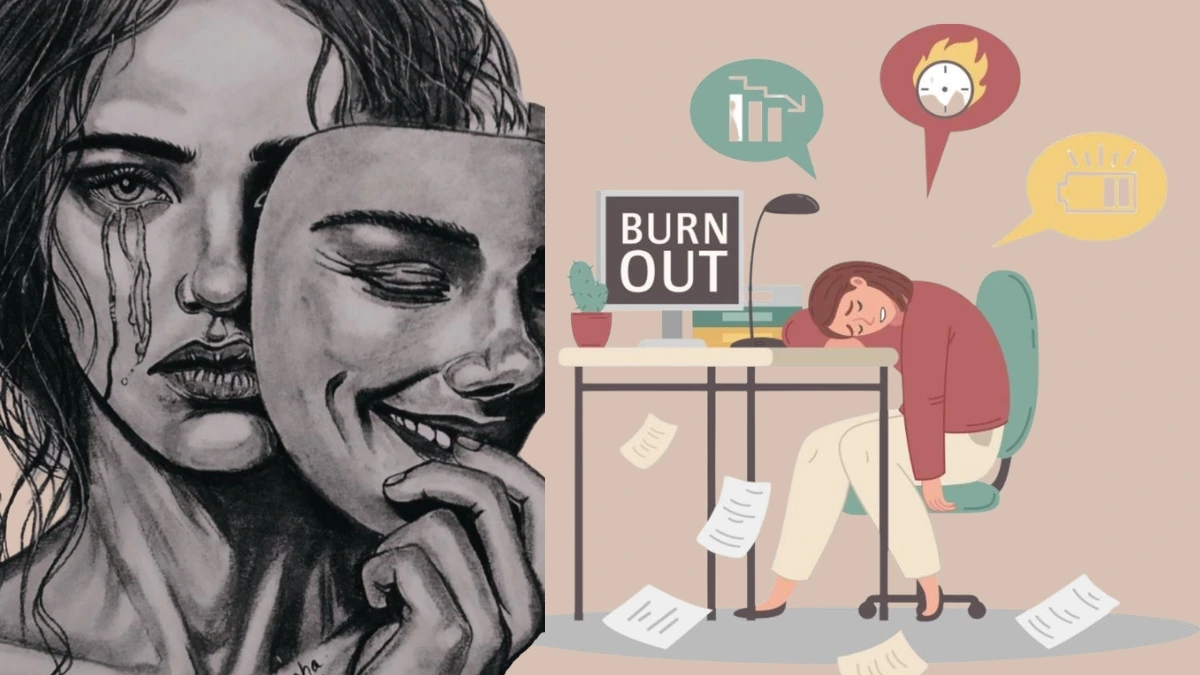
Exhausted, unmotivated, and emotionally drained — but is it burnout or depression? The two feel similar but are very different. Here’s how to tell them apart before it gets worse.
New Delhi: We’ve all had those stretches where getting out of bed feels like a battle, work feels pointless, and even things you used to enjoy just don’t hit the same anymore. Most people chalk it up to “burnout” — but what if it’s actually something deeper?
Burnout and depression get mixed up constantly, and honestly, it makes sense. The symptoms overlap in ways that confuse even well-meaning friends, family, and sometimes even doctors. But calling them the same thing is a mistake that can cost you months of proper recovery. The cause is different, the scope is different, and most importantly — what actually helps is different.
Let’s break it down clearly.
What is Burnout?
The World Health Organization (WHO) officially recognised burnout in 2019 as a workplace phenomenon — meaning it is specifically tied to chronic, unmanaged work stress rather than simply being “really tired of your job.”. It shows up in three main ways:
You’re completely drained of energy, physically and mentally
You’ve started feeling cynical, distant, or checked out from your work
You feel like nothing you do at work actually matters or makes a difference
The key word here is work. Burnout lives at the office (or wherever your job stress comes from). A lot of people notice that evenings, weekends, or a proper vacation actually bring some relief. That’s a significant clue.
What Is Depression?
Depression — specifically Major Depressive Disorder — is a clinically diagnosed mental health condition. It’s not a bad week or a rough patch. It’s a persistent low mood or loss of interest in almost everything, lasting at least two weeks, that bleeds into every corner of your life.
Unlike burnout, depression doesn’t clock out when you do. It follows you on holiday. It shows up on lazy Sunday mornings. It doesn’t care whether work is going well or not. That’s the fundamental difference — depression is everywhere, all the time.
Burnout vs. Depression
Here’s where most people get confused, so let’s make it straightforward:
Who it targets: Burnout is almost entirely work-related. Depression doesn’t discriminate — it affects your relationships, your hobbies, your self-care, everything.
How it feels emotionally: Burnout tends to bring frustration, cynicism, and that “I just don’t care anymore” feeling about your job. Depression brings something heavier — persistent sadness, emptiness, hopelessness, and often a crushing sense of guilt or worthlessness.
What’s unique to each: With burnout, you lose your passion for work specifically. With depression, you lose your ability to feel pleasure in anything — that’s called anhedonia, and it’s one of the clearest signs that what you’re dealing with goes beyond job stress.
Does rest help? With burnout, genuine time off usually helps — even a little. With depression, rest alone doesn’t move the needle much. You can sleep ten hours and still wake up feeling completely hollow.
Where They Do Overlap
Both burnout and depression can cause:
- Bone-deep fatigue that doesn’t go away
- Trouble sleeping, or sleeping too much
- Difficulty focusing or making decisions
- Pulling away from people
- Zero motivation to do, well, anything
This is exactly why self-diagnosis is so unreliable. Research actually shows that severe burnout — especially the exhaustion part — can act as a gateway to depression if it goes unaddressed long enough.
When Should You Actually See Someone?
Stop guessing and talk to a mental health professional if:
- Things aren’t improving even after rest or time away from work
- You’re feeling hopeless, worthless, or overwhelmed by guilt
- You’ve stopped enjoying things that used to make you happy
- You’re having thoughts of self-harm or suicide
- Your daily functioning has taken a serious hit

