
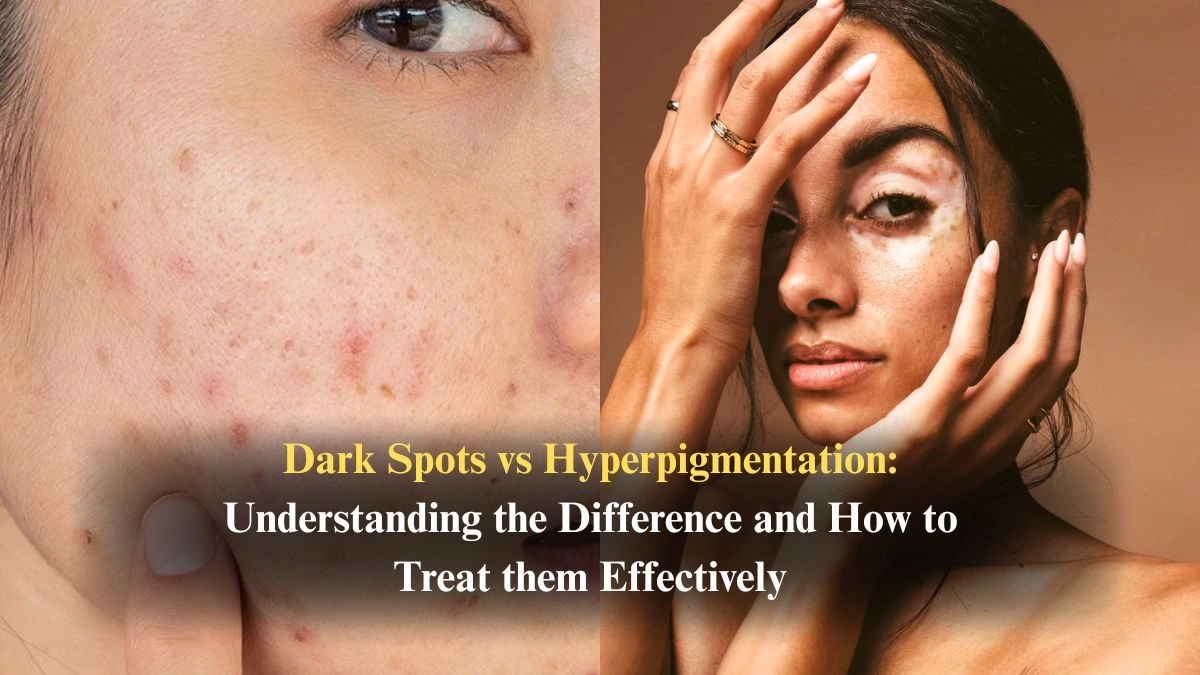
Dark spots and hyperpigmentation are often confused, but they are not exactly the same. Discover what causes them, how they differ, and the most effective ways to treat and prevent them.
New Delhi: Many people notice stubborn dark patches on their skin or little marks that stay after acne heals. If you start looking for fixes you’ll see words like hyperpigmentation and dark spots, plus names such as melasma or post-inflammatory hyperpigmentation (PIH). It can make skincare feel confusing and overwhelming.
The reality is that dark spots and hyperpigmentation are related but not the same. Understanding the difference between them can help you choose the right treatment. Whether your issue comes from sun exposure, acne scars, or hormonal changes, knowing the cause is the first step toward clearer and more even-toned skin.
Difference Between Dark Spots and Hyperpigmentation
Hyperpigmentation is when skin gets darker. This happens when skin makes much melanin. Melanin is what gives skin its color. When this happens you get areas or patches on your skin.
- Melasma is an example. It often appears on cheeks or forehead.
Dark spots are different. They are dark marks. They are clearly defined. They are darker than the skin, around them.
- Sun spots are an example.
- Age spots are another example.
- Marks left after acne are also spots.
Dark spots are a type of hyperpigmentation. They are smaller and more focused. Hyperpigmentation can cover areas.
Understanding hyperpigmentation and dark spots helps in finding the treatment.
- Knowing the difference can help you choose what to do.
Common Causes of Dark Spots and Hyperpigmentation
Both conditions happen because of a lot of melanin. Many things can cause this to happen.
- Sun Exposure
The suns ultraviolet rays make the skin produce melanin to protect itself. When you are out in the sun a lot without protection you might get sun spots and uneven skin color. This is because the skin is trying to protect itself from the suns rays. The skin does this by making melanin.
- Skin Inflammation or Injury
Skin problems like acne or eczema or rashes can leave spots after they heal. These dark spots are called hyperpigmentation. This type of hyperpigmentation happens when the skin is trying to heal itself. Melanin is the cause of these spots.
- Hormonal Changes
When your hormones change, like during pregnancy or when you use birth control you might get melasma. Melasma causes patches of skin on your face. This is because of the change in hormones and the way it affects melanin.
- Aging
As you get older your skin gets more damaged from the sun. This can cause age spots on parts of your body that get a lot of sun. The suns rays can cause a lot of damage, to the skin over time. This damage can cause the skin to produce melanin.
- Medications and Skin Conditions
Some medicines and health issues can also affect melanin. This is not very common.. It is something that can happen. Melanin can be affected by things.
Effective Treatments for Dark Spots and Hyperpigmentation
The main aim for treating these conditions is the same. We want to lower the amount of melanin our skin makes. We also want to help our skin get rid of cells and make new ones.. We want to stop new dark spots from coming.
Most of the time we have to wait a bit to see these treatments work. It usually takes around four to twelve weeks to see that our skin is really getting better. The treatment for these conditions takes time. We are talking about the treatment for these skin conditions. The treatment, for these skin conditions can take a while.
- Daily Sunscreen
Sunscreen is the base of any plan to treat skin color problems. You should put on a sunscreen that protects against all kinds of sun rays and has a protection factor of least 30 every single day. It does not matter if it is sunny or cloudy outside or if you stay inside most of the time. Being in the sun can make skin color problems worse.
- Over-the-Counter Ingredients That Help Fade Pigmentation
Vitamin C: A powerful antioxidant that brightens the skin and helps reduce melanin production. It works best when used in the morning.
Niacinamide (Vitamin B3): A gentle ingredient that reduces inflammation and helps even out skin tone.
Azelaic Acid: Particularly effective for pigmentation related to acne or rosacea.
Kojic Acid and Arbutin: These ingredients help inhibit the enzyme responsible for melanin production.
Retinol or Retinoids: They increase skin cell turnover, helping pigmented cells fade more quickly. These should be used at night and introduced gradually.
Glycolic Acid and Lactic Acid: Mild chemical exfoliants that remove dull surface cells and improve overall skin texture.
Tranexamic Acid: A newer ingredient known to be effective for stubborn pigmentation, especially melasma.
A common skincare routine includes vitamin C in the morning and a retinol or brightening treatment at night, combined with consistent sunscreen use.
- When to Consult a Dermatologist
If over-the-counter treatments do not show improvement after several months, a dermatologist may recommend stronger treatments. These may include prescription products such as hydroquinone, tretinoin, or combination creams that target pigmentation more effectively.
For melasma, doctors may also prescribe oral or topical tranexamic acid, which has shown promising results in reducing stubborn discoloration.
- Professional Skin Treatments
For deeper or more resistant pigmentation, professional dermatological treatments can provide faster and more noticeable results.
Common in-clinic procedures include:
Chemical Peels: Treatments using acids such as glycolic acid or TCA to exfoliate deeper layers of the skin.
Laser Therapy and IPL (Intense Pulsed Light): These technologies target melanin directly and are especially effective for sun spots.
Microneedling: Often combined with brightening serums to improve skin texture and reduce pigmentation.
Cryotherapy: A treatment used to remove isolated age spots.
While these procedures can deliver quicker results than topical products, they may involve temporary redness and sensitivity and should be performed by qualified professionals.
Daily Habits That Help Fade Pigmentation Faster
In addition to treatments, certain lifestyle habits can help improve results and prevent further discoloration.
First, address the underlying cause. For example, if acne continues to trigger dark marks, treating the acne should be the priority. Avoid picking or squeezing pimples, as this often worsens pigmentation. Maintaining a well-hydrated skin barrier through proper moisturizing can also support the healing process.
It is also important to avoid harsh home remedies. Ingredients like lemon juice are sometimes recommended online, but they can irritate the skin and make pigmentation worse.
For individuals with deeper skin tones, gentler ingredients such as niacinamide and azelaic acid are often safer choices, as stronger treatments may sometimes cause additional inflammation and lead to more pigmentation.