With representation from 127 countries and the presence of over 6,000 international buyers, the six-day event focuses on sustainable fashion, handloom craftsmanship and innovation in the textile sector.
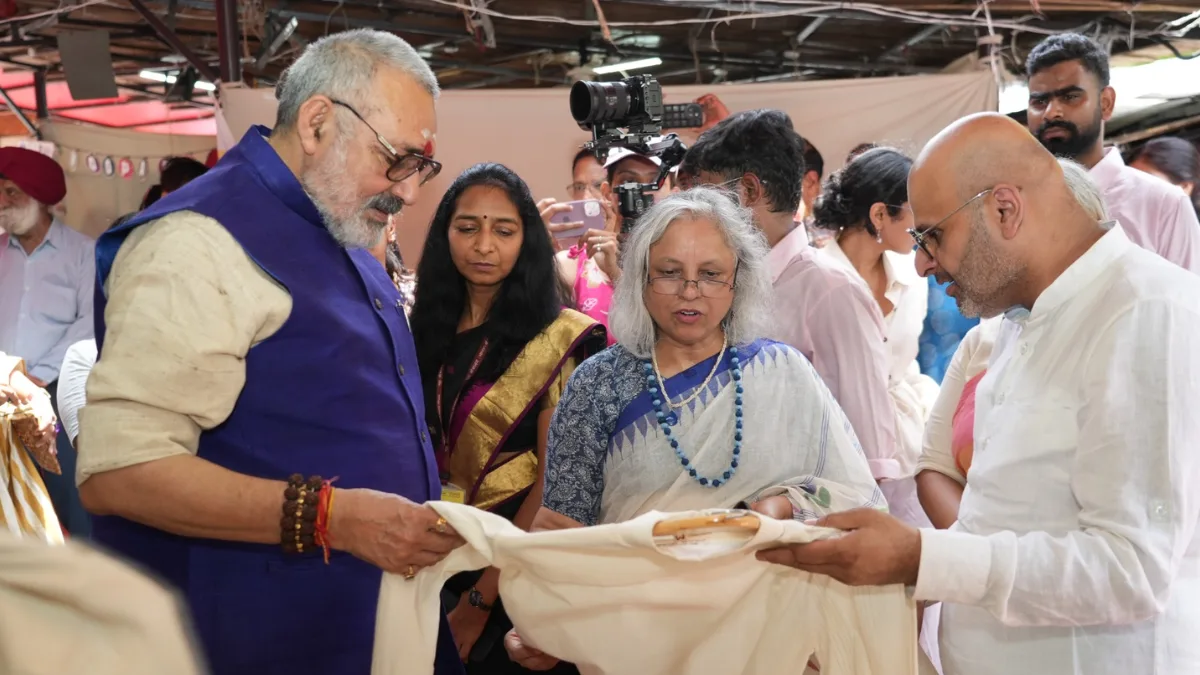
New Delhi: On Monday, the fourth edition of Bharat Tex 2026 began at Dilli Haat, INA, bringing together key participants from the global textile industry, such as manufacturers, exporters, artisans, designers, policymakers and buyers. Organised by the Development Commissioner for Handlooms under the Ministry of Textiles, the six-day event aims to present India’s textile value chain to the world while promoting sustainability, technological innovation and export opportunities.
According to the organisers, the exhibition has attracted participation from 127 countries and more than 6,000 international buyers, making it one of India’s largest textile trade events. The event features handlooms, handicrafts, apparel, technical textiles, sustainable fabrics, textile machinery and emerging technologies, while providing a platform for business partnerships, buyer-seller meetings and policy discussions.
Alongside the trade exhibition, Bharat Tex 2026 is hosting public-facing initiatives such as Weave the Future 4.0, where visitors can learn visible mending, textile repair, upcycling and recycling techniques, and explore products made from discarded textiles. More than 100 enterprises, artisan collectives, designers and startups are participating in the initiative, which promotes circular fashion and responsible consumption. Visitors can also attend workshops, textile collection drives and demonstrations on converting textile waste into value-added products.
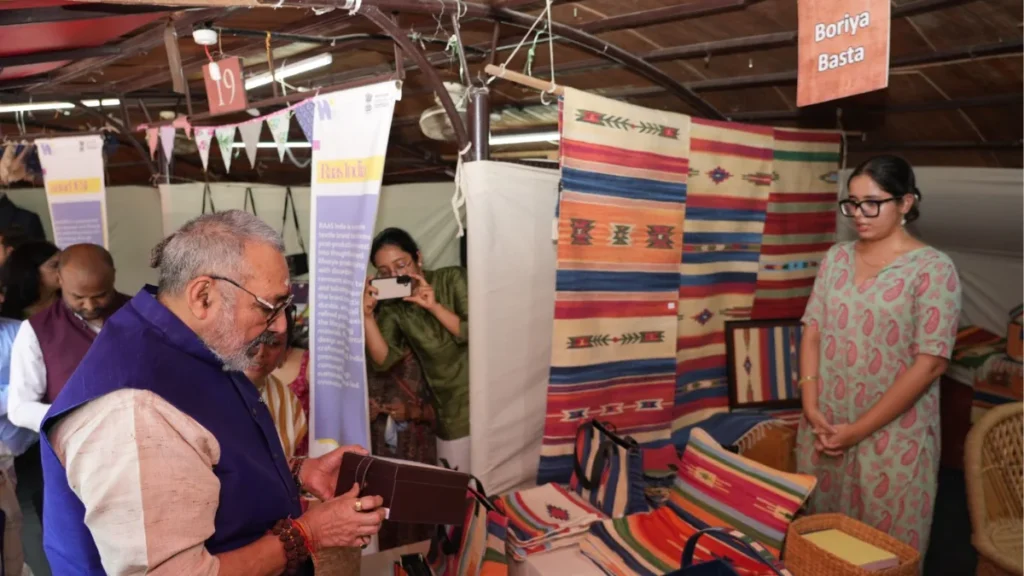
The event also runs alongside Indie Haat 2026 at the National Crafts Museum, where artisans and weavers from across India are showcasing traditional crafts through live demonstrations and exhibitions, offering visitors an opportunity to interact directly with craftspeople and learn about India’s textile heritage.
Inaugurating Bharat Tex 2026, Union Textiles Minister Giriraj Singh said India’s textile industry must prepare for future growth by adopting circular economy practices, including upcycling and manufacturing with zero water and zero carbon footprints. He noted that India’s per capita textile consumption has nearly doubled from around 25 metres in 2014 to nearly 50 metres today, making sustainable production and efficient management of textile waste increasingly important.
The minister said India generates nearly 7.8 lakh tonnes of textile waste annually and called on entrepreneurs to develop innovative recycling solutions that can convert waste into value-added products. He also urged the industry to ensure textile workers receive monthly incomes of at least ₹15,000 to ₹20,000, saying growth in the sector should benefit both businesses and workers.
Calling Bharat Tex a rapidly expanding global platform, Singh said the exhibition is steadily emerging as one of the world’s leading textile events and will play a key role in strengthening India’s position as a global hub for sustainable textiles and manufacturing.