MERI Group’s New Delhi conference explores space-maritime integration, AI, satellite surveillance, NavIC and maritime technology to support India’s $30 trillion economy and Viksit Bharat 2047
New Delhi: How can India use its growing space and maritime capabilities to strengthen national security and accelerate economic growth? This was the central theme of a conference hosted by MERI Group of Institutions in collaboration with the Space Industry Association of India (SIA India) in New Delhi.
The event brought together defence specialists, scientists, academics and policy experts to examine the potential of space-maritime integration as India works towards its Viksit Bharat and $30 trillion economy goals by 2047.
Building a Common Strategy for Space and Maritime Sectors
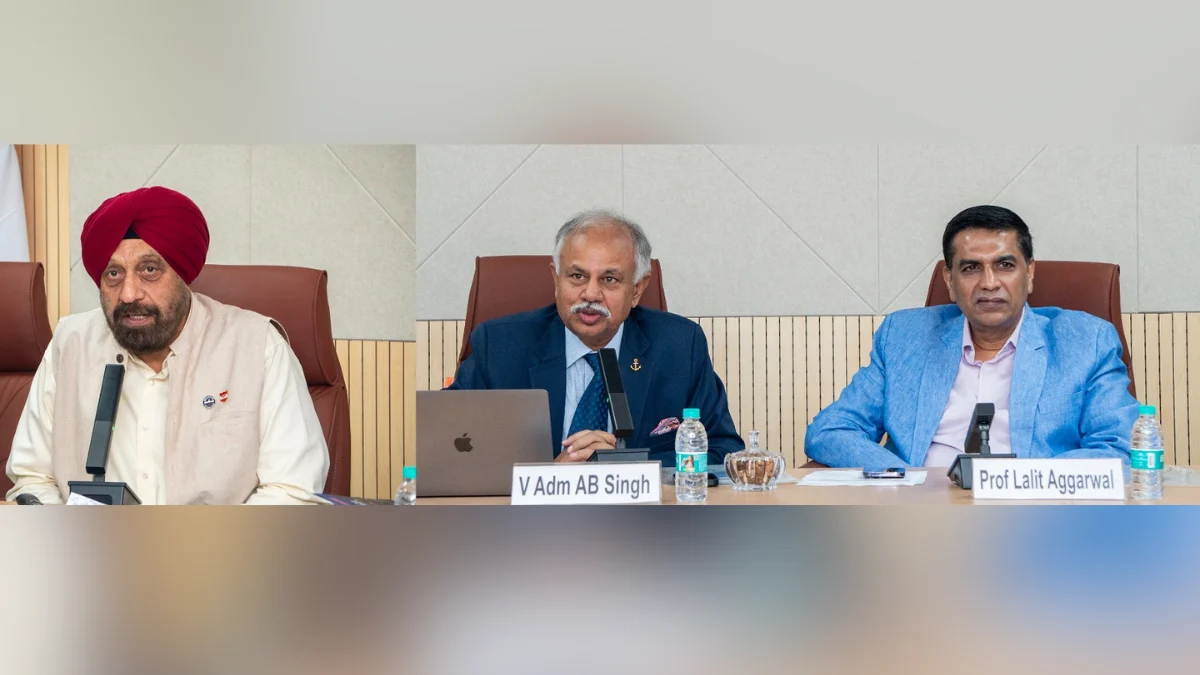
Lalit Aggarwal, Vice-President of MERI Group, said the traditional separation between space and maritime sectors is rapidly changing.
He stressed that educational institutions should encourage interdisciplinary research and train professionals who can work across space technology, maritime security, data science and national security.
Strengthening Maritime Security With Space Technology
Vice Admiral Ajendra Bahadur Singh (Retd.) pointed to the importance of space-based surveillance for monitoring the Indian Ocean Region.
He said conventional surveillance needs to be complemented by space-based ISR and integrated sensor networks. These technologies can provide greater visibility of maritime activity, support the protection of sea lanes and help identify emerging grey-zone threats.
Lt. Gen. P.J.S. Pannu (Retd.), Dean of the Department of Space Studies, highlighted the importance of building India’s indigenous technological and data capabilities.
He advocated greater integration of GIS, Positioning, Navigation and Timing, ISR and AI so that satellite data can be transformed into actionable intelligence.
Supporting Shipping, Fisheries and the Blue Economy
The conference also looked at the commercial potential of space-maritime technologies.
Experts said digital maritime mapping and accurate hydrographic surveys can improve navigation and logistics while supporting more efficient shipping operations. Satellite data can also help fishing communities locate potentially productive fishing areas.
These applications can contribute to the growth of India’s blue economy and create wider economic opportunities in the maritime sector.
Satellite Data for Cyclone Tracking and Disaster Response
Another key area discussed was disaster management. Satellite observations, ocean forecasting, weather monitoring and cyclone tracking can improve early-warning systems and strengthen preparedness in coastal areas.
Such capabilities can help authorities provide timely alerts and improve evacuation and emergency response during severe weather events.
NavIC and SAR Satellites in Focus
Experts called for increased investment in small-SAR satellite constellations and stronger indigenous PNT capabilities. They also highlighted the importance of expanding the use of India’s NavIC navigation system.
Participants further called for closer cooperation between government agencies, the Indian Navy, shipping companies, technology firms, universities and research institutions.
Space-Maritime Integration and Viksit Bharat 2047
The conference concluded that India’s space and maritime capabilities can complement each other across multiple areas, from national security and maritime trade to fisheries, disaster resilience, innovation and technological self-reliance.
According to the experts, developing an integrated space-maritime ecosystem can strengthen India’s strategic capabilities while supporting the broader Viksit Bharat 2047 vision and the goal of a $30 trillion economy.