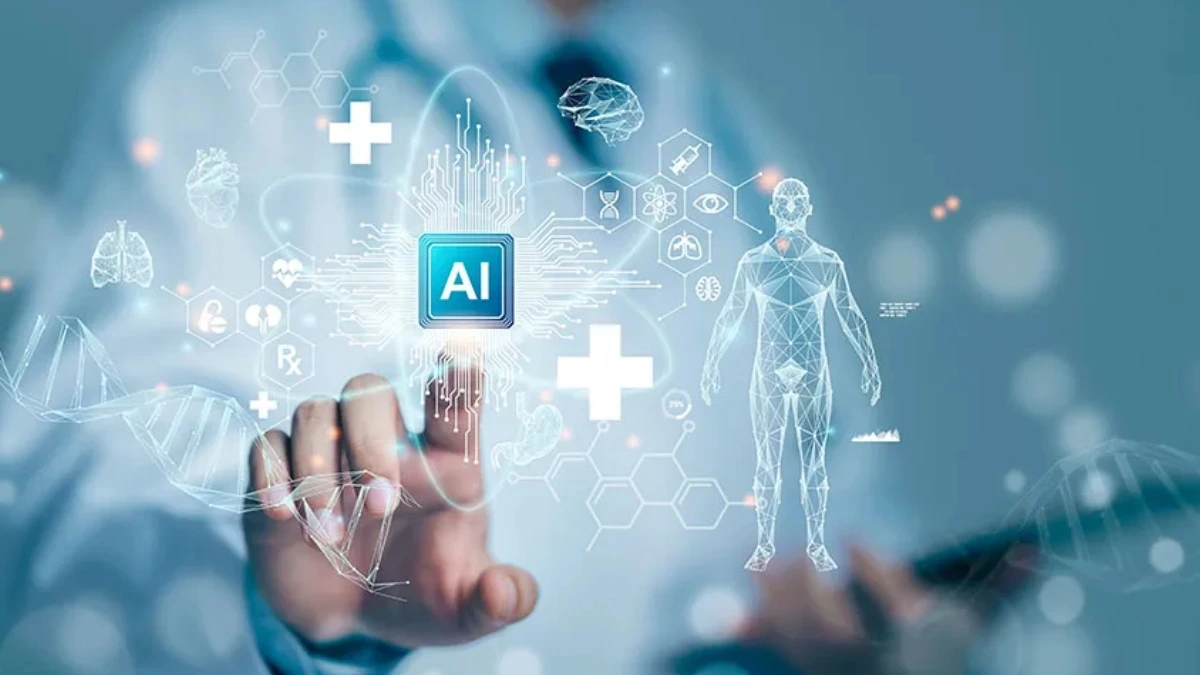
Can we trust AI with our lives? Artificial Intelligence (AI) is transforming healthcare by improving diagnosis, treatment, and hospital management. Here’s a comprehensive look at the benefits, risks, and future of AI in healthcare.
New Delhi: Artificial Intelligence (AI) has rapidly emerged as one of the most transformative technologies of the 21st century, and healthcare is among the sectors experiencing its greatest impact. From detecting diseases earlier to helping doctors make better decisions and improving hospital operations, AI has the potential to revolutionize the way healthcare is delivered.
Organizations such as the World Health Organization (WHO), the U.S. Food and Drug Administration (FDA), and medical researchers worldwide believe that AI could significantly improve patient outcomes. However, the growing use of AI also raises important questions regarding ethics, data privacy, transparency, and safety.
As healthcare systems increasingly adopt AI-driven tools, experts emphasize the need to balance innovation with responsible use.
What Is AI and How Does It Work in Healthcare?
Artificial Intelligence refers to computer systems designed to perform tasks that typically require human intelligence. These technologies include machine learning (ML), natural language processing (NLP), robotics, and large language models (LLMs).
In healthcare, AI is being used for:
- Medical imaging analysis such as X-rays, CT scans, and MRIs
- Early detection of diseases including cancer, diabetes, and heart conditions
- Drug discovery and development
- Clinical documentation and report generation
- Hospital management and workflow optimization
- Virtual health assistants and chatbots
- Personalized treatment planning
By analyzing vast amounts of medical data, AI helps healthcare professionals make faster and more informed decisions.
Major Benefits of AI in Healthcare
- Improved Diagnostic Accuracy
AI systems can analyze medical images and patient data with remarkable speed and accuracy. Several studies have shown that AI tools can assist doctors in identifying diseases such as breast cancer, lung cancer, and diabetic retinopathy at earlier stages, improving treatment outcomes.
- Personalized Treatment Plans
Every patient is different. AI enables personalized medicine by considering a patient’s medical history, genetics, lifestyle, and other factors to recommend tailored treatment approaches.
- Increased Efficiency in Hospitals
Administrative tasks consume a significant amount of healthcare professionals’ time. AI can automate documentation, scheduling, billing, and record management, allowing doctors and nurses to focus more on patient care.
- Faster Drug Discovery
Developing new medicines traditionally takes years and requires enormous investments. AI can analyze millions of chemical compounds and biological datasets, accelerating the drug discovery process and reducing development costs.
- Expanding Access to Healthcare
AI-powered telemedicine platforms and digital health tools are helping provide medical consultations and services to patients living in rural and underserved areas, improving access to healthcare worldwide.
Risks and Challenges Associated with AI
- Data Privacy and Security Concerns
AI systems require access to large amounts of patient information. Protecting sensitive health data from cyberattacks and unauthorized access remains a major challenge.
Healthcare providers must ensure that AI systems comply with privacy regulations and maintain patient confidentiality.
- Bias in AI Algorithms
AI systems are only as reliable as the data used to train them. If training datasets lack diversity or contain biases, AI models may produce inaccurate or unfair results, potentially worsening healthcare inequalities.
- Lack of Transparency
Many advanced AI systems operate as “black boxes,” meaning their decision-making processes are difficult to understand or explain. This lack of transparency can create challenges in medical settings where accountability is essential.
- Patient Safety Risks
Although AI technologies are highly advanced, they are not infallible. Errors in algorithms or inaccurate data may lead to incorrect diagnoses or treatment recommendations. Therefore, AI should support—not replace—human medical expertise.
- Ethical and Legal Questions
As AI becomes more integrated into healthcare, questions regarding responsibility and accountability become increasingly important. If an AI system makes an error that harms a patient, determining who is legally responsible remains a complex issue.
Global Efforts to Regulate AI in Healthcare
Governments and international organizations are working to establish regulations and ethical frameworks for AI applications in healthcare.
The World Health Organization (WHO), the European Union, and the U.S. FDA have introduced guidelines aimed at ensuring AI technologies are safe, transparent, and reliable.
Countries such as India are also investing in digital health initiatives, including the Ayushman Bharat Digital Mission and AI-based healthcare programs, to improve medical services and accessibility.
Large Language Models and Their Growing Role
Large language models such as ChatGPT, Google Gemini, and medical AI platforms are increasingly being used to summarize medical literature, generate clinical documentation, and assist healthcare professionals with information management.
However, experts stress that these systems should serve as support tools rather than replace doctors. Human oversight remains essential to ensure accuracy and patient safety.
The Future of AI in Healthcare
The role of AI in healthcare is expected to expand significantly in the coming years. Technologies such as robotic surgery, digital pathology, wearable health devices, and real-time health monitoring are likely to become more widespread.
AI could help predict diseases before symptoms appear, improve treatment outcomes, and make healthcare more efficient and accessible.
Nevertheless, experts agree that AI is not intended to replace healthcare professionals. Instead, it should act as a powerful partner that enhances their capabilities and improves patient care.
Artificial Intelligence has the potential to transform healthcare by improving diagnosis, treatment, and healthcare management. Its ability to process massive amounts of data and support medical decision-making offers enormous opportunities for better patient outcomes.
However, challenges related to data privacy, algorithmic bias, transparency, safety, and ethical responsibility must be addressed carefully