Discover how India secures its 15,000+ km of land borders with specialized forces under the “One Border, One Force” policy. with the help of BSF, ITBP, SSB, Assam Rifles
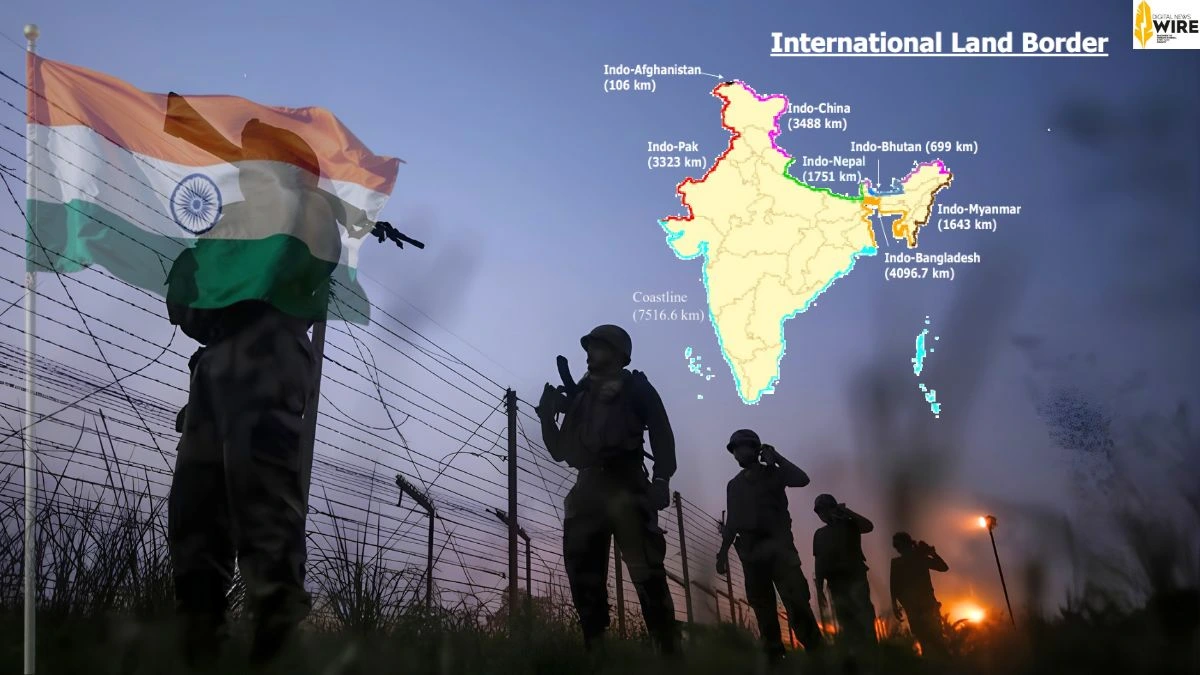
New Delhi: India is a vast country with long and diverse borders. From snowy mountains to deserts, rivers, and thick jungles, our borders pass through many types of difficult terrains. These borders stretch over 15,106 kilometers and touch seven neighboring countries.
To protect this huge boundary, India follows a smart policy called “One Border, One Force”. This means each border is mainly looked after by one dedicated Central Armed Police Force.
These forces work day and night in tough conditions to stop infiltration, smuggling, terrorism, and illegal crossings. The Indian Army steps in strongly wherever the situation becomes serious, especially on the Pakistan and China borders.
which force guards which border.
India-Pakistan Border
Length: About 3,323 km (covers Jammu & Kashmir, Punjab, Rajasthan, and Gujarat).
Main Force: Border Security Force (BSF)
This is one of the most sensitive borders. The BSF secures the International Border (IB), while the Indian Army primarily manages the Line of Control (LoC) in Kashmir. This force works to prevent cross-border terrorism, narcotics trafficking, and drone attacks.
In recent years, the BSF has been raising new battalions and utilizing modern equipment such as smart fencing, cameras, and anti-drone systems.
India-Bangladesh Border
Length: About 4,096 km (India’s longest land border)
Main Force: Border Security Force (BSF)
This border passes through five Indian states: West Bengal, Assam, Meghalaya, Tripura, and Mizoram. A significant portion of it is flanked by rivers, marshes, and villages situated in close proximity to the border line.
The primary responsibilities of the BSF include curbing illegal immigration, cattle smuggling, and human trafficking. In 2025, in light of the evolving situation in Bangladesh, the government approved plans to deploy additional battalions and upgrade infrastructure.
India-China Border (Line of Actual Control – LAC)
Length: About 3,488 km (from Ladakh to Arunachal Pradesh)
Main Force: Indo-Tibetan Border Police (ITBP)
The ITBP is specially trained for high-altitude and mountain warfare. Its personnel live and patrol at altitudes exceeding 10,000 to 18,000 feet, amidst freezing cold and thin air. Due to ongoing border tensions, the Indian Army maintains a strong presence here.
In recent years, India has constructed several new roads, bridges, and tunnels in Ladakh to improve the movement of troops and supplies.
India-Nepal Border
Length: About 1,751 km
Main Force: Sashastra Seema Bal (SSB)
This is an open border—there are no fences here, and people can easily cross the frontier for trade and family visits. The SSB focuses on monitoring illegal movement, counterfeit currency, and the smuggling of goods, while also maintaining friendly relations with Nepal. This border passes through Uttarakhand, Uttar Pradesh, Bihar, West Bengal, and Sikkim.
India-Bhutan Border
Length: About 699 km
Main Force: Sashastra Seema Bal (SSB)
Much like the Nepal border, this one is also peaceful and open. The SSB ensures security while facilitating smooth trade and people-to-people contact. The region encompasses mountains and forests across states such as Sikkim, West Bengal, Assam, and Arunachal Pradesh.
India-Myanmar Border
Length: About 1,643 km
Main Force: Assam Rifles
The Assam Rifles is India’s oldest paramilitary force (formed in 1835). It guards the remote, densely forested border areas situated in the Northeast. In addition to border security, it also conducts counter-insurgency operations in this region. The force works closely with the Indian Army in these areas.
Why this system works
The “One Border, One Force” policy helps each force become experts in their specific terrain and challenges. For example, ITBP masters high mountains, while BSF handles deserts and riverine areas.
Modernization Efforts:
- Use of drones, thermal cameras, AI surveillance, and smart fencing.
- Construction of new roads and forward bases.
- Better living conditions for jawans posted in remote areas.
These forces are often called the “first line of defence.” They work in tough weather, far from cities, and away from their families. Their dedication keeps India safe every single day.