India’s Yashasvi Jaiswal and Sri Lanka’s Asitha Fernando have been fined 25% of their match fees and given one demerit point each after a heated incident in the Colombo Test
New Delhi: India batter Yashasvi Jaiswal and Sri Lanka fast bowler Asitha Fernando have both been fined 25% of their match fees following a heated confrontation during the second Test in Colombo.
The International Cricket Council (ICC) said both players breached Article 2.12 of its Code of Conduct, which covers inappropriate physical contact during an international match. Along with the fine, both players received one demerit point.
The incident happened on the opening day of the Test after Fernando dismissed Jaiswal for 45.
What Happened Between Jaiswal and Fernando?
The incident took place during the 17th over of India’s first innings.
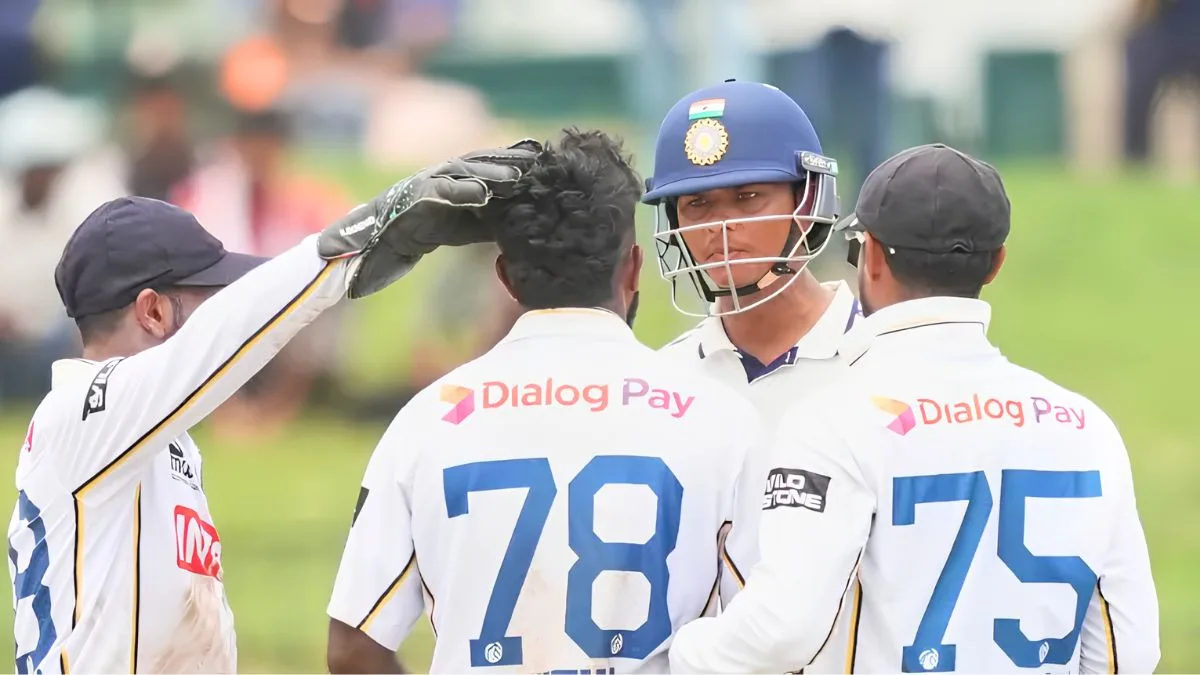
After Fernando dismissed Jaiswal, the Indian batter walked towards the Sri Lankan bowler and the two exchanged words. According to the ICC, Fernando then moved his head towards Jaiswal.
Jaiswal leaned forward in response, and the two players’ heads made contact.
Other players stepped in to prevent the situation from escalating. Sri Lanka captain Dhananjaya de Silva was among those who intervened and helped separate the two players.
The ICC subsequently charged both cricketers under Article 2.12.
Both Players Accepted the Punishment
There was no formal disciplinary hearing.
Jaiswal and Fernando both admitted the offences and accepted the sanctions proposed by Andy Pycroft, a member of the Emirates ICC Elite Panel of Match Referees.
The charges were levelled by the match officials, including on-field umpires Ahsan Raza and Sharfuddoula Ibne Shahid, third umpire Rod Tucker and fourth umpire Prageeth Rambukwella.
The ICC also confirmed that neither player had committed an offence during the previous 24 months.
What Does the Punishment Mean?
The incident was classified as a Level 1 offence under the ICC Code of Conduct.
For a Level 1 breach, the maximum punishment can be a fine of up to 50% of the player’s match fee, along with demerit points. The ICC’s decision to impose a 25% fine and one demerit point falls within the permitted range.
The demerit points remain on a player’s disciplinary record for 24 months. If a player reaches four or more demerit points during that period, they are converted into suspension points under the ICC disciplinary system.
The Incident Came After Jaiswal’s Dismissal
Jaiswal’s dismissal added to the tension surrounding the moment.
Fernando got the Indian opener out for 45 runs, bringing an end to his innings. The exchange between the two players happened immediately after the dismissal.
While verbal exchanges are common in competitive cricket, the ICC considered the physical contact between the players serious enough to fall under Article 2.12.
India and Sri Lanka Fighting in Colombo Test
The incident came during the second and final Test of India’s series against Sri Lanka in the ICC World Test Championship.
India had already taken a 1-0 lead after winning the first Test in Galle by 165 runs. The second Test began in Colombo on August 23 and is scheduled to run until August 27.
The Colombo match has also seen several intense moments on the field as both teams compete to finish the series strongly.
No Suspension for Either Player
The punishment does not result in an immediate suspension for Jaiswal or Fernando.
Both players received one demerit point, but neither had any previous offences recorded in the previous 24 months. The ICC’s current system becomes more serious when players accumulate multiple demerit points within that period.
For now, both players are free to continue participating in the ongoing Test.
A Heated Moment That Did Not Escalate
The confrontation lasted only a short time before teammates and officials intervened. The ICC’s action serves as a reminder that competitive intensity cannot cross the line into inappropriate physical contact.
For Jaiswal and Fernando, the matter has now been dealt with through the ICC’s Level 1 disciplinary process, with both players accepting the punishment without requiring a formal hearing.