
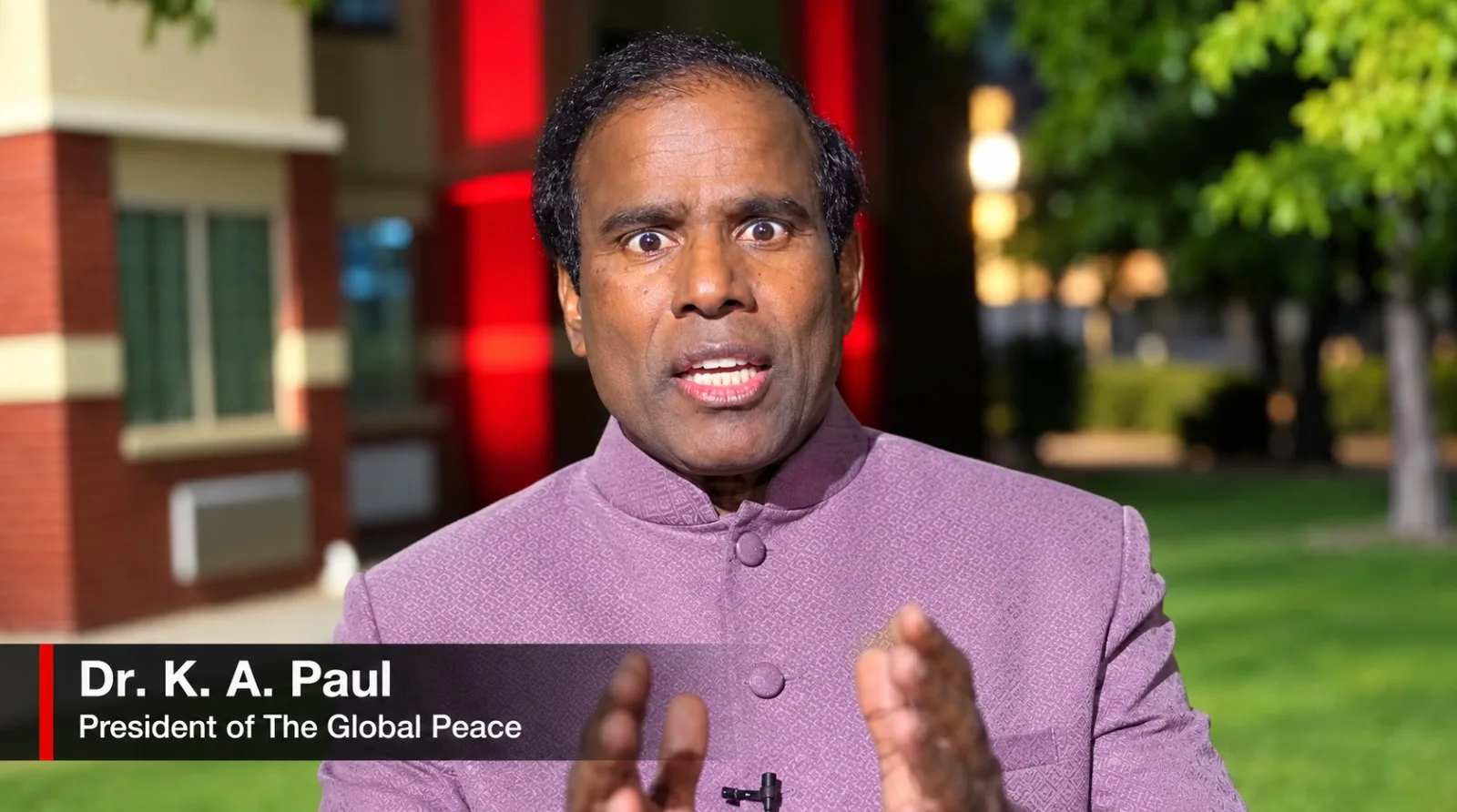
Dr. K. A. Paul urges Israelis to demand political accountability from Netanyahu and support peaceful diplomacy to resolve the Iran conflict
WASHINGTON, D.C.: Dr. K. A. Paul has called on Israelis to demand political accountability, support peaceful change and encourage negotiations to end the conflict involving Iran, Israel and the United States.
In an appeal issued ahead of October 27, the founder of the Global Peace Initiative criticised Israeli Prime Minister Benjamin Netanyahu’s approach to Iran. He urged citizens who oppose the government’s policies to express their views peacefully and use democratic processes to seek a different political direction.
Dr. Paul said Israel’s long-term security depended on more than military strength and called for greater emphasis on diplomacy, civilian protection and regional stability.
K. A. Paul Questions Netanyahu’s Iran Policy
Dr. Paul argued that Netanyahu’s support for military confrontation had contributed to the escalation of tensions involving Iran. He called for an examination of the political decisions behind the conflict and their consequences for Israel and the wider region.
He also questioned the advice provided to US President Donald Trump and whether expectations of regime change influenced decisions to pursue military action.
Dr. Paul said he had visited Iran four times and had met political leaders and members of Iranian society. Drawing on those experiences, he argued that military strikes or the killing of national leaders would not automatically bring about political change.
He urged decision-makers to consider the long-term consequences of military action and explore opportunities for a negotiated settlement.
Dr. Paul Calls for Political Accountability in Israel
Dr. Paul urged Israeli voters to assess Netanyahu’s leadership and consider whether the government’s policies had brought the country closer to lasting peace.
He argued that citizens could support Israel’s security while questioning decisions that they believed increased the risk of wider conflict.
In his appeal, Dr. Paul called on Israelis who favour peace to unite peacefully and demand accountability from political leaders.
He also made a distinction between criticism of government policy and criticism of Jewish people as a religious or ethnic community. He said his concerns focused on political decisions and their consequences.
Iran War Could Deepen Global Humanitarian Concerns
Dr. Paul warned that the conflict could have consequences far beyond the Middle East, including pressure on fuel and food prices, economic uncertainty and greater hardship for vulnerable populations.
He highlighted the challenges faced by families that struggle to afford food, clean water and essential nutrition. He urged governments and humanitarian organisations to assess these risks and protect communities facing economic distress.
According to Dr. Paul, the cost of war should also include the effects on displaced families, workers, farmers and children whose lives are disrupted by prolonged instability.
He called for urgent international cooperation to reduce civilian suffering and prevent further escalation.
Questions About Trump’s Decisions and Diplomatic Advice
Dr. Paul called for greater transparency about the advice President Trump received before pursuing military action against Iran.
He urged the US administration to clarify which alternatives it considered, how it evaluated the possibility of regime change and whether diplomatic initiatives received serious attention.
He also raised concerns about potential conflicts of interest involving people participating in Middle East diplomacy. He said authorities should examine these matters using documented evidence.
Dr. Paul stated that he had submitted a 15-point peace proposal on March 15 and called on the relevant parties to examine its potential contribution to ending the conflict.
He argued that diplomatic initiatives capable of reducing violence should receive a fair assessment.
Dr. Paul Praises Mike Johnson’s Peace Efforts
Dr. Paul expressed appreciation for US House Speaker Mike Johnson and the peace efforts he said Johnson had undertaken.
He encouraged American leaders to help bring the parties towards negotiations and a settlement that addresses security concerns while protecting civilian lives.
Dr. Paul said political and religious leaders had a responsibility to pursue diplomacy and consider the long-term consequences of military confrontation.
He called for cooperation among the United States, Israel, Iran and international partners to establish a path towards ending hostilities.
October 27 Appeal: A Message to Israeli Citizens
Dr. Paul directly addressed Israelis who want a safer future for their families. He urged them to participate peacefully in the political process and consider whether the country’s current leadership offered the best path towards long-term security.
He said citizens should not have to choose between supporting their country’s security and demanding accountability from its leaders.
Dr. Paul also emphasised that people across Israel, Palestine, Iran, the United States and the wider Middle East deserved a future free from the constant threat of war.
His October 27 appeal called for peace, political responsibility and a renewed commitment to diplomatic solutions.
Global Peace and Prayer Meeting in Dallas
Dr. Paul invited media representatives and leaders to attend a Global Peace and Prayer Meeting in Dallas at Prismo Colinas on Sunday, October 25, 2026, from 6 pm to 9 pm, according to his statement.
He called on President Trump, Prime Minister Netanyahu, Iranian leaders, Speaker Mike Johnson and other international leaders to support credible diplomatic initiatives.
Dr. Paul reaffirmed his commitment to engaging political, religious and humanitarian leaders in efforts to resolve the conflict peacefully.
He concluded by urging the international community to prioritise human life, pursue negotiations and work towards a future in which communities across the region can live with greater security and stability.


