Two individuals — a Delhi businessman and a Vancouver-resident orthopaedic specialist — say a non-surgical treatment in Ludhiana helped them avoid surgery they had been advised as unavoidable
When Anil Jain, a 72-year-old businessman from New Delhi, visited his fourth orthopaedic specialist last year, the recommendation was the same as it had been at the previous three consultations: knee replacement surgery.
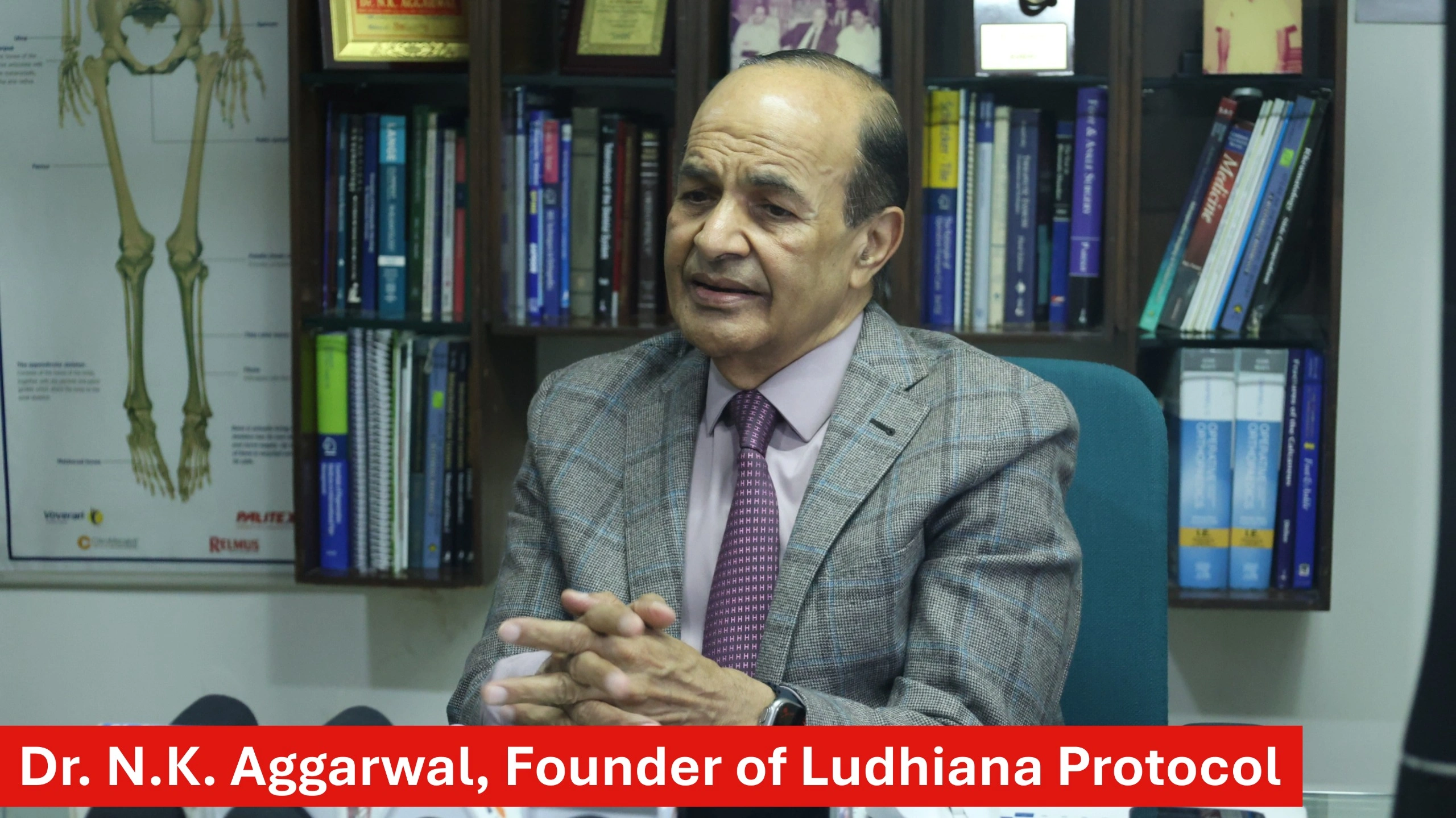
Mr. Jain did not proceed. Instead, he travelled to Ludhiana to consult Dr. N.K. Aggarwal, a veteran orthopaedic surgeon who has spent the last several years developing a non-surgical, regenerative approach to knee osteoarthritis. Two months into the treatment, Mr. Jain says he has returned to the level of mobility he had abandoned as lost.
“I was cancelling things I never used to think twice about,” he said. “I stopped my morning walks. I started avoiding stairs. Four doctors told me replacement was the only way forward.” He added that he had not anticipated the pace of recovery. “Around six weeks in, I noticed the morning stiffness was gone. Then I realised I had been taking the stairs without thinking about it.”
Mr. Jain is among hundreds of patients Dr. Aggarwal says have undergone what he calls the Ludhiana Protocol — an integrated course of non-surgical interventions that includes joint lavage, lubrication therapy, platelet-rich plasma (PRP) treatment derived from the patient’s own blood, and systemic anti-inflammatory measures. The treatment requires no hospitalisation, no general anaesthesia, and no prolonged rest.
A Transatlantic Journey for a Non-Surgical Solution
A similar account comes from Dr. Madan Lal Singla, 79, now resident in Vancouver, Canada, who says he flew to India specifically to explore alternatives to the knee replacement surgery recommended by specialists in Canada.
“At my age, the idea of a major surgery in another country — the recovery, the rehabilitation — it felt very overwhelming,” Dr. Singla said. He underwent the Ludhiana Protocol during his stay in India and returned to Canada without having required surgery.
His family members who accompanied him noted the change in mobility was visible within the treatment period itself. “When he arrived, he needed help getting up from a chair. By the time he was flying back, he was walking through the airport on his own,” they said.
Dr. Singla said he was now managing independently and had resumed activities that knee pain had forced him to curtail. “I came to India looking for some relief. I went back feeling like myself again,” he said.
The clinical basis
Dr. Aggarwal, who has over 50 years of orthopaedic experience and was among the early practitioners of knee replacement surgery in India, said his shift in approach was rooted in evolving clinical understanding of knee osteoarthritis.
“Current research increasingly indicates that knee osteoarthritis is not simply a mechanical problem — it is part of a chronic, low-grade inflammatory process associated with ageing,” he said. “If we treat only the joint and not the underlying condition, we are addressing the symptom rather than the cause.”
He said over 95% of patients treated under the protocol had reported improvement in pain and mobility, and that many who had been advised surgery were now managing without it.
Dr. Aggarwal, however, cautioned against viewing the protocol as a universal alternative. “In advanced cases where the joint is severely deformed, replacement remains the appropriate course,” he said. “But for patients in the early to moderate stages, this offers a credible option that may delay or avoid surgery altogether.”
He added that improvement was gradual, with most patients noticing meaningful change over a period of two to three months.
A wider concern
Knee osteoarthritis is among the most prevalent conditions affecting adults over 60 in India, with incidence rising alongside sedentary lifestyles, increasing obesity rates, and longer life expectancy. Specialists have noted that cases are increasingly being reported among younger populations as well.
Dr. Aggarwal, who continues to perform knee replacement surgery where clinically indicated, said he now considers it a last resort rather than a default recommendation. “We cannot stop ageing,” he said, “but we can control its painful effects on the knees. The earlier we begin treatment, the better the chances of preserving the natural joint.”