
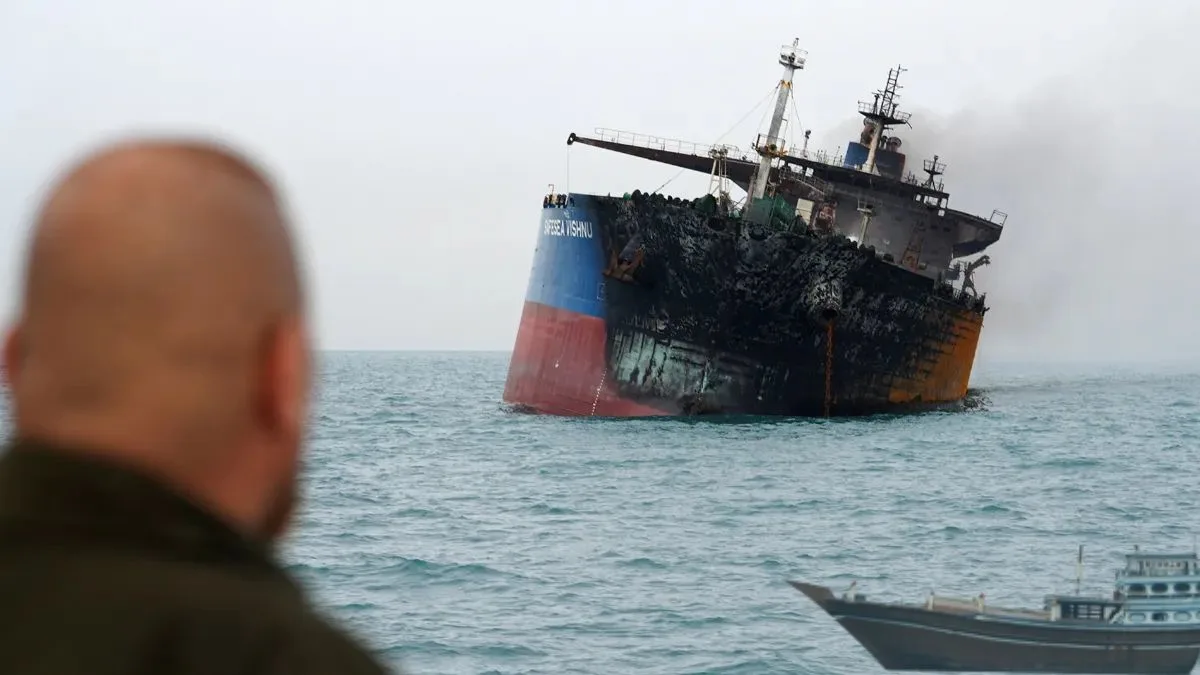
Several Indian sailors lost their lives during the ship attacks in the Gulf of Oman and the Strait of Hormuz in 2026. Learn about these incidents, the Indian sailors who died, and the Indian government’s actions.
New Delhi: India is considered one of the world’s largest producers of trained seafarers. Approximately 23,000 Indians currently work on ships in the Gulf region. These individuals, living at sea for months at a time, away from their families, keep the world’s supply chains running.
When the US and Israel launched attacks on Iran in March 2026, Iran responded by attacking ships transiting the Gulf. Over the next few months, the Strait of Hormuz and the Gulf of Oman became some of the world’s most dangerous sea routes, resulting in the loss of many Indian sailors’ lives.
Each incident is being verified from multiple verified sources to help distinguish between accurate and misleading information.
Drone Attack on MKD Vyom (March 1-2, 2026)
On March 1, 2026, the Palau-flagged oil tanker Skylight was attacked near Khasab Port, Oman. Fifteen Indian and five Iranian sailors were on board. Fortunately, all 20 crew members were rescued safely, although four were injured.
However, at the same time, another tanker, MKD Vyom, was hit by a drone attack, killing an Indian national on board. The Indian Embassy in Muscat expressed condolences and said it was working with Omani authorities to ensure the speedy return of the body.
Note: The Skylight and MKD Vyom were two separate ships. There were no fatalities on the Skylight,the Indian national who died was on board the MKD Vyom.
Safesea Vishnu Attack Near Basra (March 12, 2026)
On March 12, 2026, the Safesea Vishnu, a US-owned crude oil tanker, was attacked near the Iraqi city of Basra. The ship was operating under the flag of the Marshall Islands.
The Indian Embassy in Iraq confirmed that one Indian sailor was killed in the attack, while the remaining 15 Indian crew members were safely evacuated. The Embassy expressed condolences to the family of the deceased and stated that it would continue to coordinate with the local administration.
US Military Attack on MT Setebelo (June 10-11, 2026)
The situation escalated in June when US forces in the Gulf began directly targeting merchant ships suspected of violating the blockade on Iran.
The Palau-flagged tanker MT Setebelo was carrying 24 Indian, 2 Pakistani, 1 Russian, and 1 Ukrainian sailors. The US Central Command fired a precision missile at the ship, alleging that it was attempting to transship oil by breaking the blockade on Iran. Twenty-one sailors were rescued safely, while three Indian sailors were killed in the attack.
India’s Shipping Minister Sarbananda Sonowal expressed deep sorrow over the incident and stated that the government was committed to providing all possible assistance to the families of the deceased. The Indian government strongly condemned the attack and summoned the US Deputy Ambassador.
This week, another ship, the all-Indian-crewed Marivex, and a third tanker, the Jalveer, were also struck by US forces, although casualties have not been confirmed.
Note: The names of the three sailors killed on the Setebelo were not available in any verified public source, so they are deliberately omitted.
Attack on GFS Galaxy – Martyrdom of Herambh Karmarkar (July 12, 2026)
On July 12, 2026, the Cyprus-flagged container ship GFS Galaxy was attacked while transiting the Strait of Hormuz. Of the 24 crew on board, 11 were Indians.
The attack caused a fire in the engine room, leaving the ship unable to move on its own. The Royal Navy of Oman rescued 23 sailors, but Herambh N. Karmarkar, a Pune resident serving as the ship’s third engineer, went missing. His body was recovered by the Oman Coast Guard approximately 60 hours later, as confirmed by his family and the shipping company.
Karmarkar was 30 years old. His family said they received the tragic news from the ship’s operating company.
Mombasa-Al Bahiyah Attack (July 14, 2026)
On July 14, 2026, just two days before the GFS Galaxy incident, two UAE oil tankers—the Mombasa and the Al Bahiyah—were hit by Iranian cruise missiles in Omani waters.
According to the UAE Ministry of Defense, one Indian sailor aboard the Mombasa tanker was killed and eight others injured in the attack. The injured included six Indians and two Ukrainian nationals, four of whom were reported to be in critical condition. A total of approximately 30 Indian sailors were aboard the two ships.
The UAE government strongly condemned the attack, calling it a blatant violation of international law.
Note: The deceased Indian sailor was aboard the Mombasa tanker, not the Al Bahiyah. The victim’s name has not yet been released in any verified report.
Why are these incidents significant?
About 20% of the world’s oil and gas supplies pass through the Strait of Hormuz. When this region became engulfed in conflict, the direct cost was borne by sailors who were ordinary commercial workers, not part of any military force.
It is noteworthy that the deaths in these incidents were not caused by the actions of just one side—some attacks were carried out by Iran, while one attack was carried out by the US military itself on a ship with an Indian crew. This is why the Indian government has had to engage in dialogue and lodge protests with both sides.
Indian Government Actions
Following these incidents, the Central Government took several steps, including:
- Convening inter-ministerial meetings led by the Ministry of Ports, Shipping and Waterways.
- Increasing surveillance of Indian seafarers operating in the Strait of Hormuz.
- In July 2026, the Indian Government temporarily suspended Indian seafarers from traveling through the Strait of Hormuz.
- Maintaining constant contact with the families of the deceased and arranging for the prompt return of the mortal remains.
- Assisting in the treatment and repatriation of injured seafarers.
The Way Forward
Experts believe that until tensions in the region subside, the threat to merchant ships and their crews will remain. Necessary steps could include:
Temporary restrictions on ship movement in conflict-prone waterways or establishing alternative routes.
Strengthening emergency evacuation and communication systems for seafarers.
Providing timely and accurate information to families.
The Indian sailors who lost their lives in 2026 weren’t fighting a war. They were simply doing their jobs—keeping the world’s supply chains running, feeding their families. Their sacrifice is a stark reminder that millions of seafarers working at sea face risks every day that those on land rarely imagine.
Note: This report is based on information from news agencies, the Indian Ministry of External Affairs, and international media reports. Where the names of any victims could not be publicly verified, they have been deliberately omitted.