
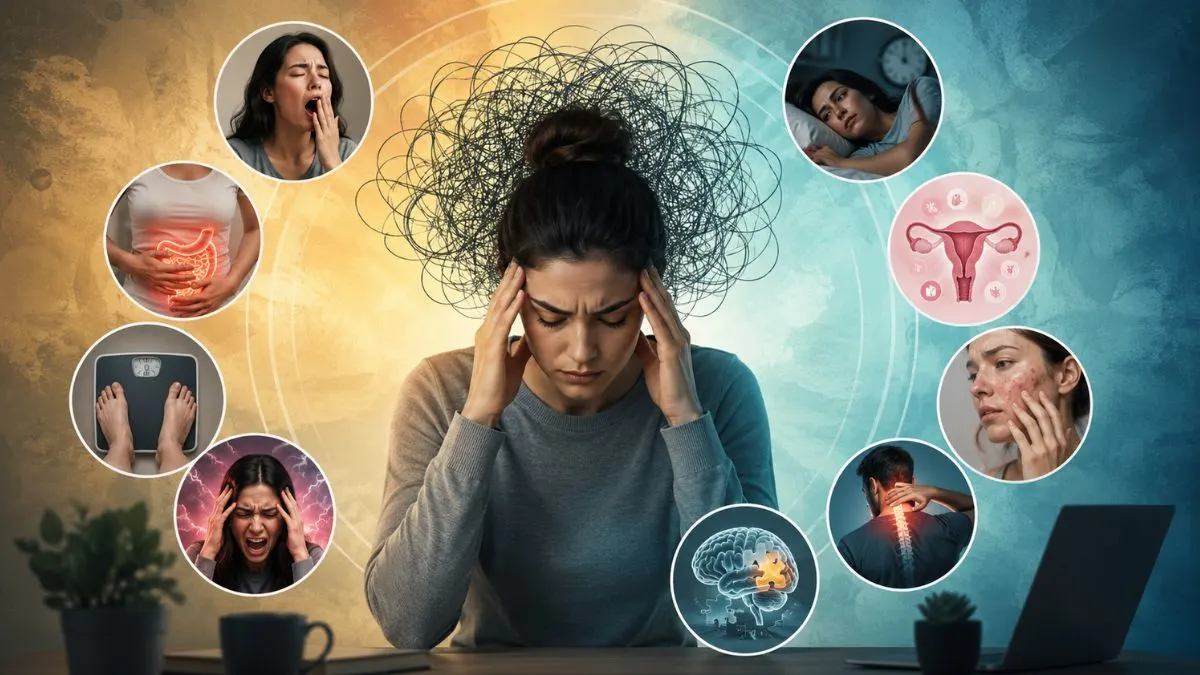
Discover the 10 most common signs of chronic stress, why they happen, and practical ways to help your body recover naturally
New Delhi: Stress is a normal part of life. It helps your body react quickly during challenging situations. However, when stress continues for weeks or months without enough recovery, it becomes chronic stress. Unlike short-term stress, chronic stress keeps your body in a constant state of alertness.
During this time, your brain continues releasing stress hormones such as cortisol and adrenaline. While these hormones are useful in emergencies, high levels over a long period can affect almost every part of your body, including your brain, heart, digestive system, immune system, hormones, muscles, and skin.
According to health experts, including the Mayo Clinic, the American Psychological Association (APA), and research on the body’s stress response, chronic stress can lead to both physical and emotional symptoms. These signs are not enough to diagnose a medical condition, but if you notice several of them together, your body may be asking for help.
Here are ten common warning signs that you may be living with chronic stress.
Feel Tired All the Time
One of the earliest signs of chronic stress is constant fatigue. You may sleep for seven or eight hours and still wake up feeling exhausted. Simple daily activities may leave you feeling drained, and you might depend on caffeine just to stay productive.
Why it happens
When stress hormones remain elevated, your body uses more energy than usual. At the same time, stress often reduces the quality of deep sleep, preventing your body from fully recovering overnight.
- What you may notice
- Feeling tired even after resting
- Afternoon energy crashes
- Difficulty staying motivated
- Needing coffee or energy drinks more often
Struggle to Get Good Sleep
Many people experiencing chronic stress have trouble falling asleep or staying asleep. Others wake up in the middle of the night with racing thoughts and find it difficult to return to sleep.
Why it happens
High cortisol levels interfere with your body’s natural sleep cycle. Instead of relaxing before bedtime, your nervous system stays alert, making restful sleep difficult.
- Common symptoms
- Taking a long time to fall asleep
- Waking up several times during the night
- Feeling unrefreshed in the morning
- Vivid dreams or restless sleep
Digestive System Becomes Unpredictable
Have you noticed frequent bloating, constipation, diarrhoea, stomach discomfort, or acid reflux during stressful periods? This is more common than many people realize.
Why it happens
The brain and digestive system communicate through what scientists call the gut-brain axis. Chronic stress can affect digestion, slow or speed up bowel movements, and even change the balance of healthy gut bacteria.
- Possible signs
- Frequent bloating
- Stomach cramps
- Changes in bowel habits
- Increased food sensitivities
Hormones Feel Out of Balance
Long-term stress can disrupt hormone production in both women and men.
Women may notice irregular menstrual cycles, more painful PMS symptoms, or changes in fertility. Men and women may both experience lower sex drive, reduced energy, or hormonal imbalances.
Why it happens
When cortisol remains high, the body often reduces the production of reproductive hormones because it prioritizes managing stress over reproduction.
- Common effects
- Irregular periods
- Increased PMS symptoms
- Low libido
- Reduced energy levels
Gain Weight Around Your Waist
Many people under chronic stress notice that weight gathers around the abdomen even without major dietary changes. Others struggle to lose weight despite exercising regularly.
Why it happens
Cortisol encourages the body to store fat, particularly around the stomach. It also increases cravings for sugary, salty, and high-calorie foods while affecting insulin sensitivity.
- Signs to watch for
- Belly fat increasing
- Frequent sugar cravings
- Emotional eating
- Difficulty losing weight
Mood Changes More Often
Stress doesn’t only affect your body—it also changes the way your brain processes emotions.
You may become more anxious, easily irritated, impatient, or emotionally overwhelmed by situations that previously seemed manageable.
Why it happens
Long-term stress affects brain chemicals involved in mood regulation. It also keeps the brain’s “alarm system” active, making you more sensitive to everyday challenges.
- Emotional symptoms
- Irritability
- Anxiety
- Feeling overwhelmed
- Low mood
- Difficulty relaxing
Skin Starts Reacting
Your skin often reflects what’s happening inside your body. Chronic stress may trigger acne breakouts, eczema flare-ups, psoriasis, dry skin, or slow healing of minor cuts.
Why it happens
Stress increases inflammation and affects the skin’s protective barrier. It can also increase oil production, making acne worse.
- Common skin changes
- Acne
- Dry patches
- Itchy skin
- Eczema flare-ups
- Slow wound healing
Body Aches More Than Usual
Persistent muscle soreness, joint stiffness, neck pain, or slow recovery after exercise may indicate your body is dealing with prolonged stress.
Why it happens
Stress causes muscles to remain tense for long periods. It also promotes low-grade inflammation, making recovery slower and increasing discomfort.
- Physical symptoms
- Muscle stiffness
- Joint aches
- Feeling swollen or puffy
- Slow recovery after workouts
Headaches and Muscle Tension Become Frequent
Do you often notice tight shoulders, neck pain, jaw clenching, or regular headaches? These are classic signs of stress-related muscle tension.
Why it happens
When you’re stressed, muscles automatically tighten as part of your body’s defence mechanism. If the stress continues, the muscles stay contracted, causing pain and tension headaches.
- Areas commonly affected
- Neck
- Shoulders
- Upper back
- Jaw
- Forehead
Experience Brain Fog
One of the most frustrating effects of chronic stress is mental fog.
You may struggle to focus, forget simple things, lose track of conversations, or feel mentally slower than usual.
Why it happens
High cortisol levels can affect areas of the brain responsible for memory, concentration, and decision-making, including the hippocampus and prefrontal cortex.
- Common signs
- Forgetfulness
- Difficulty concentrating
- Poor productivity
- Mental exhaustion
- Trouble making decisions
How to Help Your Body Recover from Chronic Stress
The good news is that chronic stress can often be managed with healthy lifestyle changes. Recovery usually happens gradually rather than overnight.
Here are a few practical ways to support your body:
Prioritize Quality Sleep
Aim for 7–9 hours of sleep each night. Try going to bed and waking up at the same time every day. Avoid screens and caffeine close to bedtime to improve sleep quality.
Move Your Body Daily
Regular physical activity such as walking, yoga, stretching, swimming, or cycling helps lower cortisol levels and releases endorphins, which naturally improve mood.
Practice Relaxation Techniques
Deep breathing, meditation, mindfulness, and progressive muscle relaxation can calm the nervous system in just a few minutes each day.
Eat a Balanced Diet
Choose whole grains, fruits, vegetables, lean proteins, healthy fats, and probiotic-rich foods. Stable blood sugar supports both your brain and digestive health.
Stay Connected
Talking to trusted family members, friends, or a mental health professional can reduce emotional stress and improve resilience.
Limit Unhealthy Coping Habits
Avoid relying on alcohol, smoking, excessive caffeine, or emotional eating to manage stress, as these may provide temporary relief but often worsen symptoms over time.
Seek Medical Advice When Needed
If symptoms continue for several weeks, interfere with your work or relationships, or become severe, consult a healthcare professional. Conditions such as thyroid disorders, anaemia, depression, anxiety disorders, diabetes, sleep disorders, and vitamin deficiencies can cause similar symptoms and should be properly evaluated.
Your body constantly communicates with you. Persistent tiredness, poor sleep, digestive problems, mood changes, headaches, muscle pain, and brain fog are not always “just stress”—they can be signs that your body has been under pressure for too long.
Recognizing these warning signs early allows you to take action before stress begins affecting your long-term health. Small, consistent lifestyle changes—combined with proper medical support when necessary—can help restore balance, improve energy, and protect both your physical and mental well-being.
Remember, managing chronic stress isn’t about eliminating every challenge from your life. It’s about giving your body the recovery time it needs to stay healthy, resilient, and strong.