Kai Chutney, a traditional red ant preparation from Odisha, is rich in nutrients and is being studied for its potential health benefits in indigenous diets
New Delhi: Nestled in the forested highlands of northern Odisha, Mayurbhanj is one of India’s most tribal-dominated districts. It has a population that is roughly 60 percent tribal — primarily Santal and Munda communities. The region is historically associated with its princely past under the Mayurbhanj state. It is also known for its vibrant cultural heritage, the Similipal forests, and the traditions of its Adivasi communities.
The tribes of Mayurbhanj — including the Kolha, Bhumij, Bathudi, Munda, Gond, Santal, and Hill Kharia — represent nearly 57.67 percent of the total population of the region, each carrying distinct customs, livelihoods, and knowledge systems largely shaped by the forest ecosystem around them. Within this landscape and its accumulated traditional knowledge, one of Odisha’s most distinctive traditional foods has emerged: Similipal Kai Chutney.
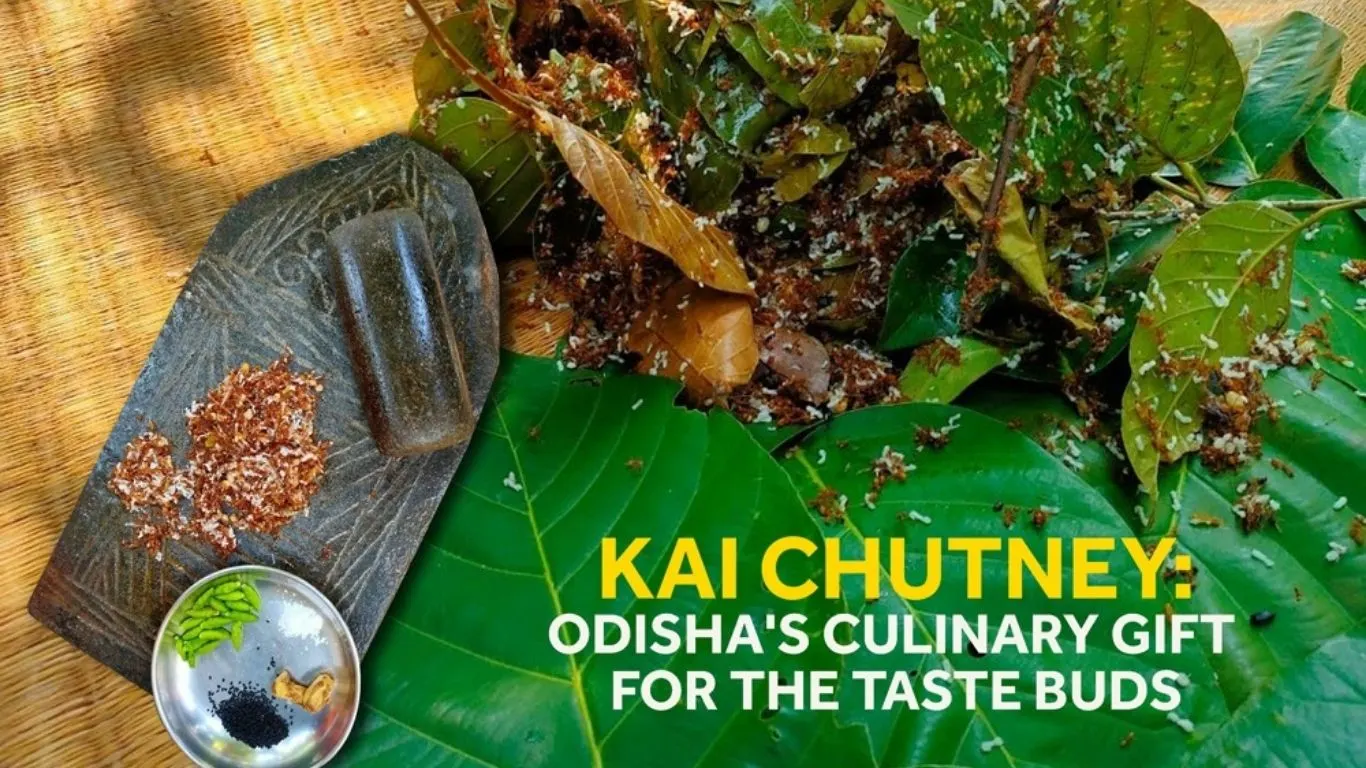
Kai Chutney is a preparation made from red weaver ants — known locally as kai pimpudi — crushed with garlic, ginger, green chilli, and salt into a coarse, rust-coloured paste. It has been a staple in the diet of the local tribes of Mayurbhanj and Keonjhar district of Odisha for generations; for most of its existence, this preparation was known only within the communities. That has changed significantly in recent years — and for reasons that go well beyond culinary curiosity.
What the Science Says
The foundation of Kai Chutney’s health value lies in the biology of its primary ingredient: Oecophylla smaragdina, the red weaver ant. Scientists at OUAT Bhubaneswar analysed the red weaver ant and found it contains proteins, calcium, zinc, vitamin B12, iron, magnesium, potassium, sodium, copper, and amino acids. This nutrient profile has led researchers to explore its nutritional potential.
For communities living deep within forested areas, far from urban food supply chains and fortified processed foods, kai pimpudi has served as a nutrient-rich traditional food source that helps meet multiple micronutrient needs in a single preparation. Beyond nutrition, the antimicrobial dimension of the chutney is equally significant. The sharp, intensely sour flavour that defines it comes from formic acid, a compound produced naturally within the ant’s body.
Formic acid possesses antimicrobial properties, which researchers continue to study for potential health applications. Tribes have long used this species as medicine for conditions including the common cold, fever, jaundice, enteric problems, and whooping cough.
The application of this knowledge has not been limited to the chutney alone. Tribal healers also prepare a medicinal oil in which ants are dipped in pure mustard oil, and after a month, this mixture is used as a body oil for babies and, in traditional practice, is believed to help manage symptoms of conditions such as rheumatism, gout, and ringworm.
What emerges from this is not a single recipe but an entire therapeutic system — one built around a single forest species and refined across generations of lived practice. Knowledge developed through generations of ecological observation in Mayurbhanj is now attracting increasing attention from researchers and nutrition scientists.
The GI Tag and What It Means
The most consequential formal recognition of this tradition came on January 2, 2024. The Similipal Kai Chutney, made with red weaver ants by the tribal people of Odisha’s Mayurbhanj district, received the Geographical Indication tag, following an application made in 2020 by the Mayurbhanj Kai Society Ltd under the Geographical Indications of Goods (Registration and Protection) Act, 1999.
It is worth noting that red weaver ant chutney is not exclusive to Odisha. The preparation is also consumed across the tribal belts of Jharkhand, Chhattisgarh, West Bengal, Madhya Pradesh, Maharashtra, Karnataka, Tamil Nadu, and Andhra Pradesh — where it is known by different names in different regions. However, GI tags are granted based on geographical association and documented traditional knowledge, not solely on origin claims. It is awarded based on documented geographical association and evidence, following a formal application process.
Odisha’s application was approved, giving the product legal recognition under the GI framework. The result is that the legal protection, the intellectual property standing, and the economic credibility now formally sit with Mayurbhanj — and local communities have reported economic benefits following GI recognition. Following GI recognition, prices reportedly increased significantly, with local traders citing higher demand, directly benefiting tribal families who harvest and sell the ants.
The Mayurbhanj Kai Society, which was started in 2018 to promote Kai Chutney through tribal food festivals and awareness meetings, has grown to around 200 member villagers, with the preparation now gaining recognition among residents of larger towns and cities as well.
The Threats Closing In
Despite this momentum, the conditions that have sustained Kai Chutney for centuries are under measurable pressure from multiple directions. The red weaver ant depends entirely on intact forest canopy to build its leaf-bound colonies. The Similipal forests — a tiger reserve and one of Odisha’s most biodiverse ecosystems — have faced consistent pressure from mining activity, infrastructure development, and encroachment along their boundaries.
As tree cover is reduced, the habitat available for ant colonies shrinks with it. Without the forest, the kai pimpudi cannot survive in numbers sufficient to sustain a harvest. Climate disruption adds a further layer of uncertainty. Shifts in temperature and rainfall patterns affect the seasonal breeding cycles of Oecophylla smaragdina, making colony formation less predictable from year to year.
According to local harvesters, the timing and abundance of harvestable nests have become increasingly irregular — a change that carries direct economic consequences for families dependent on a reliable annual season.
A Pharmacy the World Is Only Beginning to Understand
The modern wellness industry has developed a growing global market around what tribal communities across India have quietly consumed for generations. Kai Chutney contains nutrients such as Vitamin B-12, iron, and zinc that are also commonly available through dietary supplements, alongside formic acid, complete protein, calcium, and a full range of amino acids.
The GI tag has brought wider recognition to Kai Chutney and the traditional knowledge associated with it. As interest in indigenous foods and sustainable nutrition grows, researchers and policymakers are increasingly paying attention to practices that have long been part of tribal communities in eastern India. The future of Kai Chutney depends on the preservation of its ecological habitat as well as the traditional knowledge associated with it.