New Delhi: The Indian government is updating its Index of Industrial Production (IIP) with a new base year of 2022-23. This new version will start from June 1, 2026. For the first time, it will officially track the production of rare earth minerals and some other important sectors.
The Ministry of Statistics and Programme Implementation (MoSPI) made these changes after expert advice. The updated IIP now covers more items total 1,042 products to better show today’s economy.
What is New in this Update?
The biggest change is adding rare earth minerals to the mining section. Mining is now divided into three parts:
- Fuel minerals
- Metallic minerals (this includes rare earths)
- Non-metallic minerals (this includes minor minerals)
- Other new areas added are:
- Gas supply (like piped natural gas)
- Water supply
- Waste management and sewerage
These changes help measure growth in green energy, modern tech, and city needs.
Also Read: D.K. Shivakumar Chosen as Karnataka Next CM; Dr. Bhargav Mallappa Extends Congratulations
What are Rare Earth Minerals?
Here’s a revised version with more transition words:
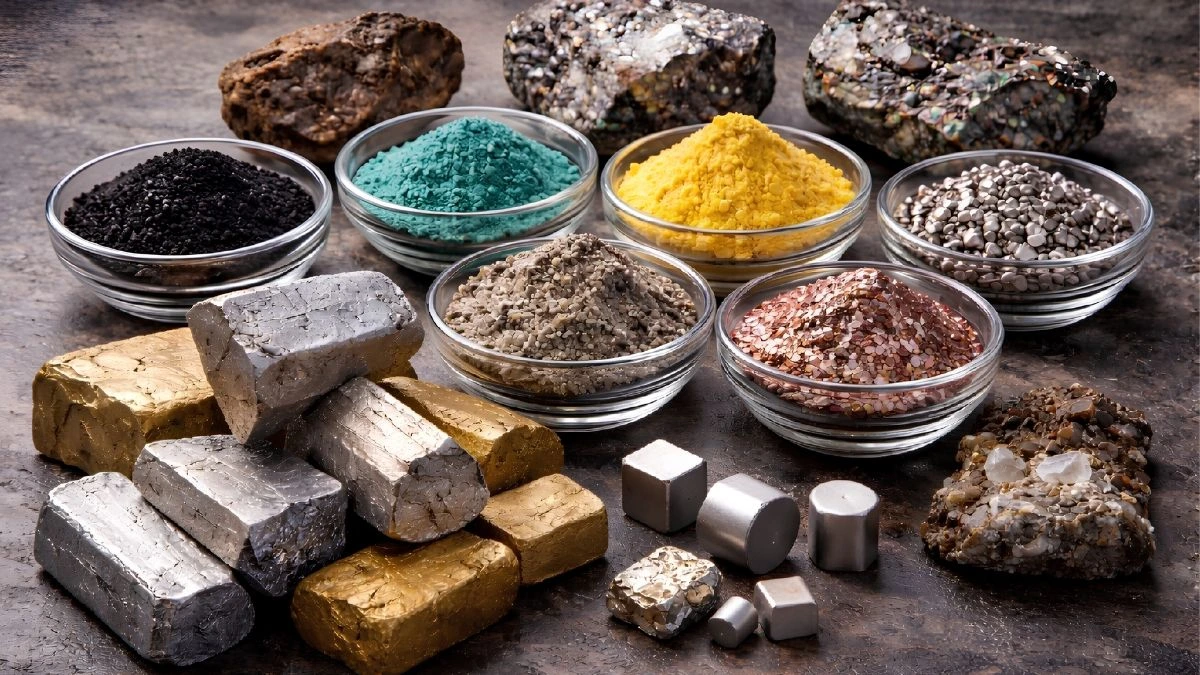
Rare Earth Elements (REEs) are a group of 17 special metals, including neodymium, dysprosium, cerium, and lanthanum. Although they are called “rare,” these elements are actually quite common in the Earth’s crust.
However, they are usually found in low concentrations, making them difficult to extract.
Moreover, the mining and refining processes are complex, expensive, and often environmentally challenging. As a result, producing usable rare earth elements requires significant investment and advanced technology.
Therefore, despite their relative abundance, REEs remain costly and strategically important for modern industries.
Main Uses:
- Electric Vehicles (EVs): Strong magnets in EV motors.
- Renewable Energy: Parts in wind turbines and solar panels.
- Electronics: Used in phones, speakers, and hard drives.
- Defence: In missiles, radars, fighter jets, and night vision tools.
- Others: Medical machines, batteries, and advanced factories.
Demand for these minerals is growing fast because of clean energy and new technology.
Why is This Important for India?
India has good reserves of rare earth minerals. But actual production is still low due to technical and other challenges.
Now, with monthly IIP data on rare earth output, the government can track progress easily. This will help schemes like the ₹7,280 crore plan to build full supply chain from mining to making magnets.
It will also reduce India’s heavy dependence on imports, especially from China.
Broader Economic Impact
The shift to the 2022-23 base year replaces the outdated 2011-12 series, ensuring the IIP better reflects post-pandemic economic realities, digitalisation, and sustainability-focused growth.
Economists view this revision positively, saying it will provide a more accurate picture of industrial performance for monetary policy decisions by the Reserve Bank of India (RBI), investment analysis, and GDP calculations.
As India pushes towards self-reliance in strategic minerals and net-zero targets, tracking rare earth production through the IIP marks an important step in aligning statistical systems with national priorities.
The updated IIP data will be released monthly starting June 2026, offering fresh insights into one of India’s most critical emerging sectors.
Also Read: How the Orange Economy is transforming Human Creativity into Global Growth