New Delhi: Imagine an economic ecosystem where your wildest ideas, late-night sketches, favorite playlist, or local cultural traditions aren’t just hobbies, they are actual and high-yielding business assets.
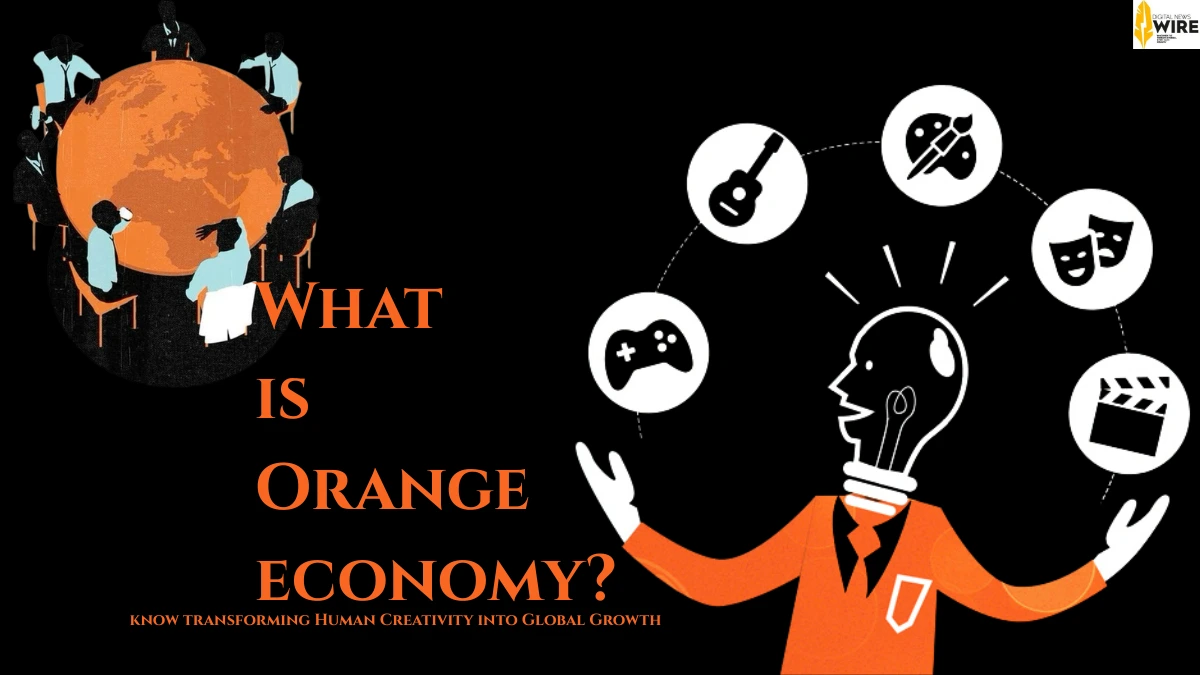
So lets talk about orange economy that also known as creative economy. It transforms creativity and intellectual property into valuable goods and services.
Far from being a niche, it ranks amongst the fastest-growing sectors globally, offering opportunities to talented people everywhere, regardless of their background.
Why Is It Called “Orange”?
They intentionally chose the color orange because across centuries and civilizations—stretching from ancient Egyptian pigments to modern psychology—orange has symbolized energy, vitality, culture, and disruptive creativity.
Unlike traditional economic models, the Orange Economy stands out clearly:
- The Brown Economy: Driven by industrial manufacturing, heavy machinery, and fossil fuels.
- The Green Economy: Focused on environmental sustainability and renewable energy.
- The Blue Economy: Centered on ocean resources and marine preservation.
- The Orange Economy: Powered exclusively by the human brain, original content, and Intellectual Property (IP).
What Actually Fits Under the “Orange” Umbrella?
The Orange Economy is incredibly diverse, seamlessly bridging the gap between centuries-old heritage and futuristic digital frontiers. According to the United Nations Conference on Trade and Development (UNCTAD), it is generally categorized into several major pillars:
| Category | Real-World Examples |
|---|---|
| Arts & Culture | Visual arts, painting, theater, live dance, literature, and traditional folklore |
| Media & Entertainment | Filmmaking, television broadcasting, music production, animation, and video games |
| Design & Fashion | Architecture, graphic design, haute couture, industrial product design, and interior styling |
| Heritage & Tourism | Museums, archaeological sites, cultural festivals, and indigenous handicrafts |
| The Digital Frontier | Software engineering, UX/UI design, content creation (YouTube, podcasts), and AI-driven media |
How massive it is?
The financial footprint of creativity is staggering. According to UNESCO, the cultural and creative industries account for roughly 3.1% of global GDP and generate over US$2.25 trillion in revenue annually.
Key Global Trends:
Employment Hub: It employs nearly 50 million people worldwide, characteristically engaging more young adults (ages 15–29) than any other traditional sector.
The Indian Powerhouse: In India, the creative sector is deeply woven into the national identity. Beyond the global phenomenon of Bollywood (which produces over 1,500 films a year), India’s IT-enabled design, gaming studios, and traditional handicraft exports are major economic drivers. Cities like Mumbai, Bengaluru, and Delhi act as mega-hubs, while smaller towns fuel the economy through specialized local crafts and heritage tourism.
Gender and Youth Inclusivity: Because the barriers to entry rely more on talent than massive capital, it offers unprecedented entrepreneurial pathways for women and marginalized communities globally.
Why the Orange Economy is vital for our future
Investing in creativity isn’t just a “feel-good” initiative; it is a highly strategic move for long-term economic resilience.
- Automation-Proof Jobs: While generative AI tools are shifting how we work, they cannot truly replicate raw human emotion, cultural nuance, lived experiences, and spontaneous originality. Creative jobs are inherently more resilient to total automation.
- The Innovation Spillover: Creative thinking regularly injects value into other industries. “Design thinking” optimizes automobile manufacturing, while narrative storytelling techniques make educational software and corporate training programs exponentially more effective.
- Eco-Friendly and Sustainable: Heavy industries strip natural resources and leave massive carbon footprints. By contrast, writing a script, composing a song, or coding an app requires minimal physical raw materials, making the Orange Economy naturally aligned with modern green goals.
Soft Power and Cultural Preservation: When a country exports its movies (like South Korea’s Parasite or K-Pop) or its textiles (like Indian Khadi), it exports its values, lifestyle, and history. This builds global goodwill, boosts international tourism, and keeps ancient traditions financially viable.
Challenges facing creators
Despite its brilliant potential, the creative ecosystem comes with structural hurdles that need urgent attention:
- The “Starving Artist” Reality: Income unpredictability is rampant. Freelancers and independent creators often struggle with inconsistent cash flows and a lack of social safety nets.
- Piracy and Weak IP Laws: Digital theft remains a multi-billion-dollar drain on the industry. Without robust copyright enforcement, creators lose their hard-earned revenue.
- The Financing Gap: Traditional banks understand how to value collateral like a factory or a plot of land. They rarely understand how to value an abstract concept, a script, or a music catalog, making it incredibly difficult for creative startups to secure loans.
- Platform Monopolies: While streaming services and social media platforms give artists global reach, algorithmic shifts and high commission rates often leave the individual creator with pennies on the dollar.
Orange Economy proves that the most valuable 21st-century resource isn’t buried underground—it lives in our minds and cultures. By nurturing talent, protecting ideas, and connecting creators to markets, we can build richer, more human, and vibrant economies.
The next time you stream a show, buy handmade crafts, enjoy live music, or scroll through creative content, remember: you’re part of a powerful global force.