New Delhi: May 28 is Menstrual Hygiene Day, serving as a global reminder that periods are just a normal part of human biology, nothing that should ever be hidden behind shame, silence, or neglect. True menstrual health goes far beyond simply providing period products it is really about understanding your own cycle, tracking changes, and practicing safe hygiene.
More importantly, it is about knowing when to get medical tests done. The menstrual cycle can often reflect broader health patterns, including hormonal balance and conditions such as PCOS or thyroid-related concerns.
Good menstrual hygiene also includes access to clean toilets, safe sanitary products, regular changing of pads, proper disposal methods, and accurate health education. Experts say that awareness around hygiene practices is equally important in preventing infections and promoting long-term reproductive health.
In India, for decades, periods were treated like a state secret, wrapped in black plastic bags and spoken about in hushed whispers. That silence is gradually breaking and India is rewriting its period narrative, moving away from deep-seated shame toward basic health and dignity.
From Awkward Silence to Open Spaces
The biggest change today is visibility. Menstruation Hygiene is no longer treated as a private issue discussed behind closed doors, it is entering mainstream spaces.
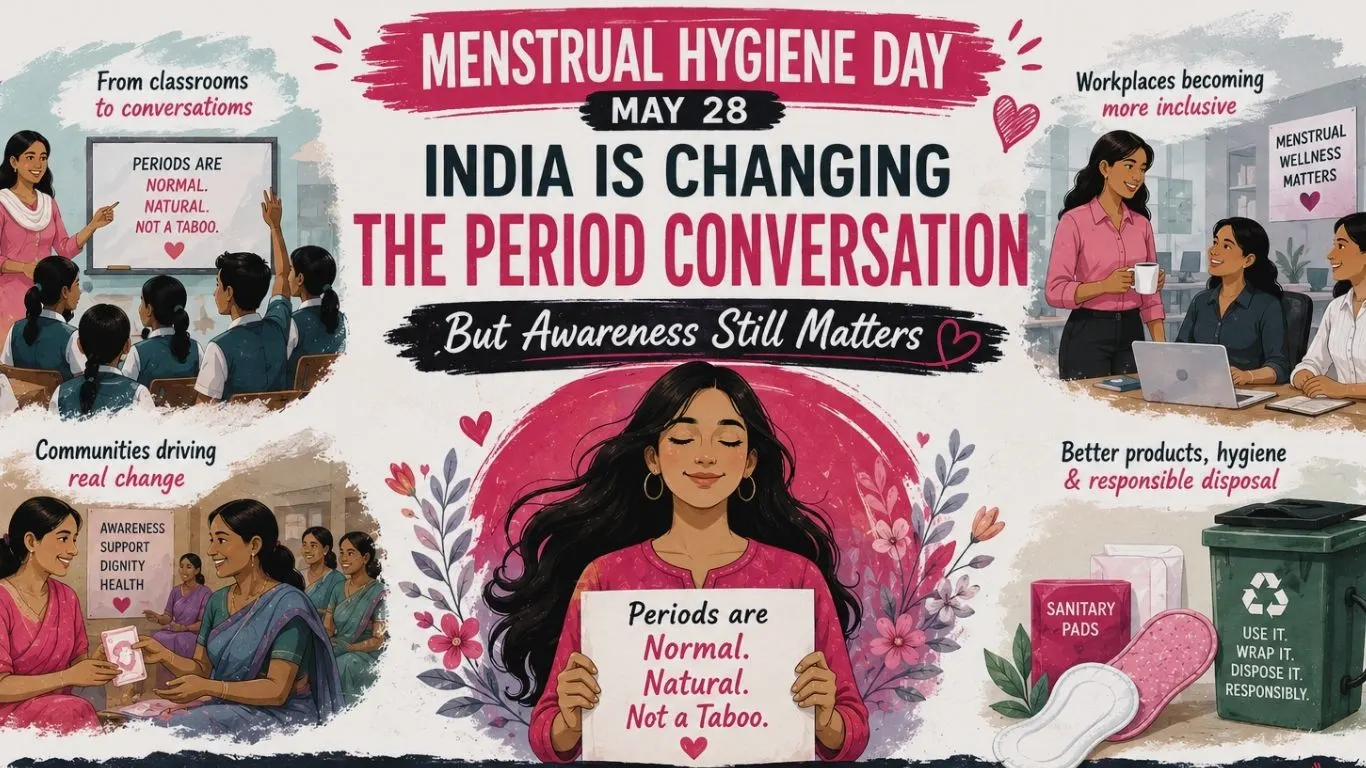
- Classrooms and Cubicles: Go into a progressive school today, and you’ll find menstrual health sessions that include both girls and boys. That was unthinkable a generation ago. In offices, conversations about menstrual wellness, proper washroom amenities, and even menstrual leave are moving from HR policies into everyday reality.
- The Pop Culture Effect: Between social media creators and mainstream cinema, seeing a sanitary pad on screen isn’t a shock anymore. This visibility has helped younger generations view periods as a normal biological reality rather than an embarrassing secret.
Policy Meeting the Ground Reality
This transformation didn’t just happen on its own. It is backed by a mix of government policy and intense grassroots work.
- State-Led Drives: Programs under the National Health Mission have done a lot of ground-level work to distribute low-cost sanitary napkins to teenage girls in rural schools. Better school toilets mean fewer girls are dropping out when they hit puberty.
- NGOs Leading the Charge: Ground-level non-profits have been doing the toughest work. By running local workshops and setting up small, eco-friendly pad manufacturing units, they have made menstrual hygiene accessible while keeping the community’s trust.
A Mature Way Forward
India’s growing focus on menstrual hygiene reflects how social attitudes can gradually evolve with awareness, education, and open conversations. What was once considered an uncomfortable topic is now becoming part of public discussions, school programs, workplace policies, and healthcare campaigns, while challenges still remains the increasing visibility around menstrual health shows that meaningful progress is already underway. By continuing to support local initiatives and encouraging informed conversations, India can build a more inclusive and informed approach toward menstrual health.
Awareness Is Growing, but Conversations Must Continue
Changing a centuries-old mindset is the hard part. Even today, in countless households, menstruating individuals are still asked to skip family prayers, stay out of kitchens, or treated as “unclean” for a few days a month. True awareness right now means looking at the next steps. We need to talk about safe waste disposal, fight basic misconceptions, and ensure men and boys are active parts of the conversation.
Menstrual Hygiene Day is not just about distributing sanitary products or running awareness campaigns for a single day. It is about creating an environment where menstruation is treated with normalcy, dignity, and proper healthcare awareness. Despite the challenges that still exist, India’s progress in menstrual health awareness reflects a larger social shift that cannot be ignored.
Conversations that were once considered uncomfortable or inappropriate are now finding space in classrooms, workplaces, healthcare campaigns, and even mainstream media.
Young people today are far more informed than previous generations, and that growing openness is slowly helping break years of silence and misinformation surrounding periods. Real progress will come when discussions around periods become as ordinary as conversations about any other aspect of health.