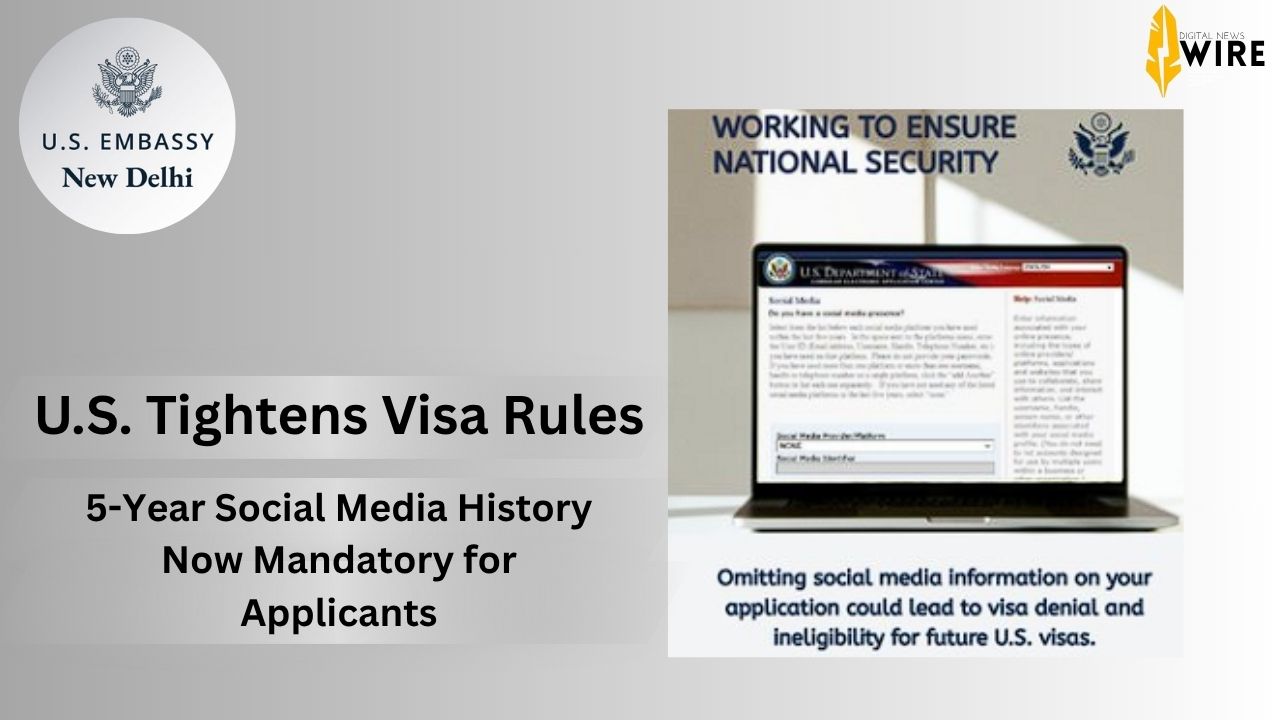
Omitting social media details from the past 5 years could result in rejection of U.S. visa applications.
New Delhi: The U.S. Embassy in India has launched tighter requirements for nonimmigrant visa applicants, specifically for students, exchange visitors, and temporary travelers. Starting immediately, all applicants are required to report usernames or handles from all social media sites utilized within the last five years on their DS-160 visa application form. Noncompliance can lead to visa denial and long-term ineligibility.
In a public notice released through its official X account, the U.S. Embassy in New Delhi said: “Visa applicants must provide all social media usernames or handles for all platforms they have used in the past 5 years on the DS-160 visa application form. Applicants swear that the information contained in their visa application is accurate and correct prior to signing and submitting. Leaving off social media data may result in visa refusal and future visa ineligibility.”
This policy highlights increasingly important advances in digital footprint analysis in U.S. visa and immigration procedures. Embassy officials said that these increased procedures are to fortify national security procedures and make sure that applicants do not present any possible threats. The embassy emphasized that all visa decisions are really a “national security decision.”
Along with the disclosing of previous social media usernames, the embassy has also provided detailed guidelines to applicants falling under the F, M, and J visa types—usually students, vocational trainees, and exchange visitors. These applicants are asked to make their social media accounts public so that consular officers can confirm identities and determine eligibility for admission. Private accounts will be reported for noncompliance, and efforts to conceal or deceive information will result in permanent visa ineligibility.
Although some may view this policy as intrusive, U.S. authorities maintain that it is essential for preventing fraud, identity theft, and identifying potential links to extremist activities. Consular officers are authorized to examine applicants’ social media content for signs of support for terrorism, antisemitism, hate speech, harassment, or violent behavior.
This shift builds on prior immigration policy approaches that employed online activities as part of the vetting process. Experts warn that applicants must now maintain their digital presence as part of their formal documents. Any mismatch between the information reported and the visible social media presence would be sufficient reason for denial.
Candidates are urged to double-check their DS-160 submissions, review all of their social media accounts used in the previous five years, and ensure that their public posts comply with visa guidelines. The embassy underlined that providing incorrect or incomplete information will be considered a serious infraction and may result in people being disqualified from applying again.
This progression serves as a reminder that in today’s globalized world, international travel and immigration processes rely heavily on consistency and openness, both offline and online.
Also Read: Learning like a child Shubhanshu from space