
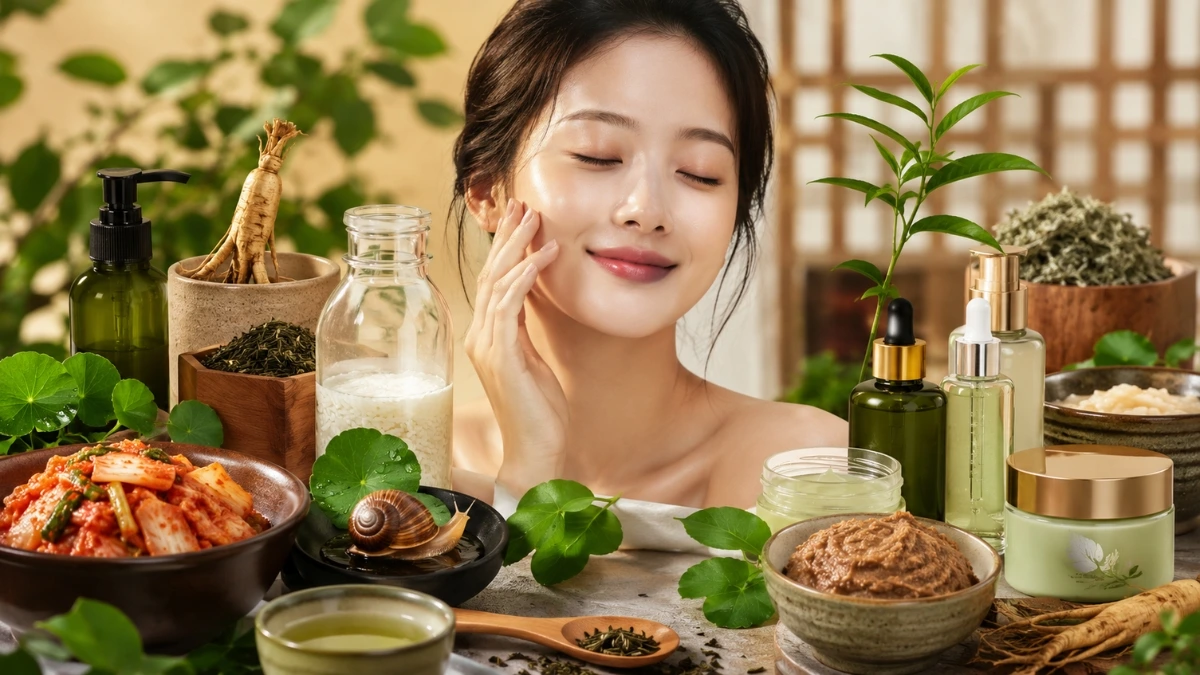
From kimchi and green tea to snail mucin and ginseng, discover 10 traditional Korean remedies that support both gut health and glowing skin. Learn how Korea’s inside-out beauty philosophy is becoming a global wellness trend.
New Delhi: In Korea, beauty isn’t just about what you put on your skin. It’s also about what you put in your body. This idea is called the “gut-skin connection.” Simply put: a healthy gut often leads to healthy, glowing skin, and an unhealthy gut can show up as breakouts, redness, or dullness.
Korean culture has used fermented foods and natural herbs for hundreds of years to keep both the gut and the skin happy. Modern skincare brands have now turned many of these same ingredients into popular K-beauty products.
Here are 10 Korean remedies that have stood the test of time and continue to gain popularity around the world for be glowing skin and happy gut
Kimchi: Korea’s Famous Fermented Cabbag
Kimchi is probably the most well-known Korean food in the world. It’s made by fermenting cabbage with spices, and that fermentation process creates good bacteria called probiotics.
Why it helps: These probiotics support a healthy gut, which can lower inflammation in the body. Less inflammation often means calmer, clearer skin with fewer breakouts and less redness.
How to use it: Eat a small portion with your meals. Try to find unpasteurized kimchi, since it still has live, active bacteria.
Centella Asiatica (Also Called Cica or Tiger Grass)
This plant has been used in Korean traditional medicine for ages. You’ll see it on the ingredient list of many Korean skincare products today.
Why it helps: Cica calms irritated skin, helps wounds heal faster, and strengthens your skin’s natural barrier. This makes it great for sensitive or acne-prone skin.
How to use it: Look for serums, creams, or ampoules with “Centella Asiatica” or “Cica” listed as an ingredient.
Snail Mucin: The Slime That Hydrates
It might sound strange, but snail mucin (the slime snails produce) is one of K-beauty’s most loved ingredients. It’s collected without harming the snails.
Why it helps: It’s full of natural compounds that deeply hydrate skin, support collagen production, and can help fade scars over time.
How to use it: Add a snail mucin essence or serum to your skincare routine after cleansing.
Korean Red Ginseng
Ginseng has a long history in Korean herbal medicine. It’s considered an “adaptogen,” meaning it helps the body handle stress better.
Why it helps: For skin, ginseng offers antioxidant protection, can improve elasticity, and may brighten dull skin. For overall health, it can support energy levels, and lower stress can indirectly help digestion too.
How to use it: Drink ginseng tea, take a supplement, or use skincare products containing ginseng extract.
Korean Green Tea
Korean green tea is known for high levels of a compound called EGCG, a powerful antioxidant.
Why it helps: Drinking it may support your gut bacteria and reduce inflammation. Applying it on skin (in toners or serums) can help control oil and protect against sun damage.
How to use it: Sip a cup daily and look for toners or serums with green tea extract.
Rice Water and Fermented Rice
Rice water has been a beauty staple in Korea for generations, often credited for giving women smooth, even-toned skin.
Why it helps: It contains vitamins and minerals that gently brighten and hydrate skin. Fermented rice, used in some skincare lines, may also offer probiotic-like benefits.
How to use it: Use as a gentle toner, or try skincare products labeled “rice ferment” or “rice probiotics.”
Doenjang: Fermented Soybean Paste
Doenjang is similar to Japanese miso but made with different bacteria strains unique to Korea.
Why it helps: It supports digestion and helps build a healthy gut microbiome. It also contains plant compounds called isoflavones, which have antioxidant properties.
How to use it: Add it to soups, stews, or use it as a marinade base.
Note: Doenjang can be high in sodium, so people watching their salt intake should use it in moderation.
Mugwort (Ssuk)
Mugwort is a traditional herb often used in Korean baths and steam treatments.
Why it helps: It’s known for calming irritated or sensitive skin and reducing redness.
How to use it: Try mugwort-infused masks, serums, or warm baths with dried mugwort.
Probiotics and Fermented Cultures
Beyond kimchi and doenjang, Korea has built an entire category of skincare around fermented ingredients, often called “ferments” on product labels.
Why it helps: Eating fermented foods supports your gut bacteria balance. Applying fermented ingredients (like galactomyces or bifida ferments) on skin can strengthen the skin barrier and improve hydration.
How to use it: Eat fermented foods regularly, and choose skincare products that list fermented ingredients.
Hyaluronic Acid
While not uniquely Korean, K-beauty brands popularized using multiple types of hyaluronic acid in one product for deeper hydration at different layers of skin.
Why it helps: It draws moisture into the skin, plumping it up and supporting the skin barrier. Well-hydrated skin is generally more resilient to outside stress.
How to use it: Use in essences, serums, or moisturizers, ideally on slightly damp skin for better absorption.
How to Follow the Korean Inside-Out Beauty Philosophy
Focus on Gut Health
Include fermented foods like kimchi and doenjang in your diet and drink green tea regularly.
Keep Your Skincare Simple
A basic Korean routine includes:
- Gentle cleanser
- Toner
- Treatment serum
- Moisturizer
- Sunscreen
- Don’t Forget Lifestyle Habits
Good sleep, stress management, hydration, and sun protection are just as important as skincare products.
Why are Korean beauty remedies gaining popularity in India?
The rising popularity of K-dramas, K-pop, and social media has introduced millions of Indians to Korean beauty culture. Instead of relying solely on cosmetic treatments, people are now embracing holistic wellness and natural ingredients. Driven by growing awareness regarding gut health and inflammation, these traditional Korean remedies are finding their way into Indian households and skincare routines.
Korean beauty wisdom teaches that real glow starts on the inside. These remedies combine old traditions with newer scientific understanding, and they’re now easy to find almost anywhere, including in India, where K-beauty has become hugely popular.
Note: These ingredients are generally safe for most people, but everyone’s skin and body are different. Always patch-test new skincare products before full use, talk to a dermatologist about ongoing skin issues, and check with a doctor before making major diet changes, especially if you have digestive conditions or high blood pressure (since fermented foods can be high in sodium).